
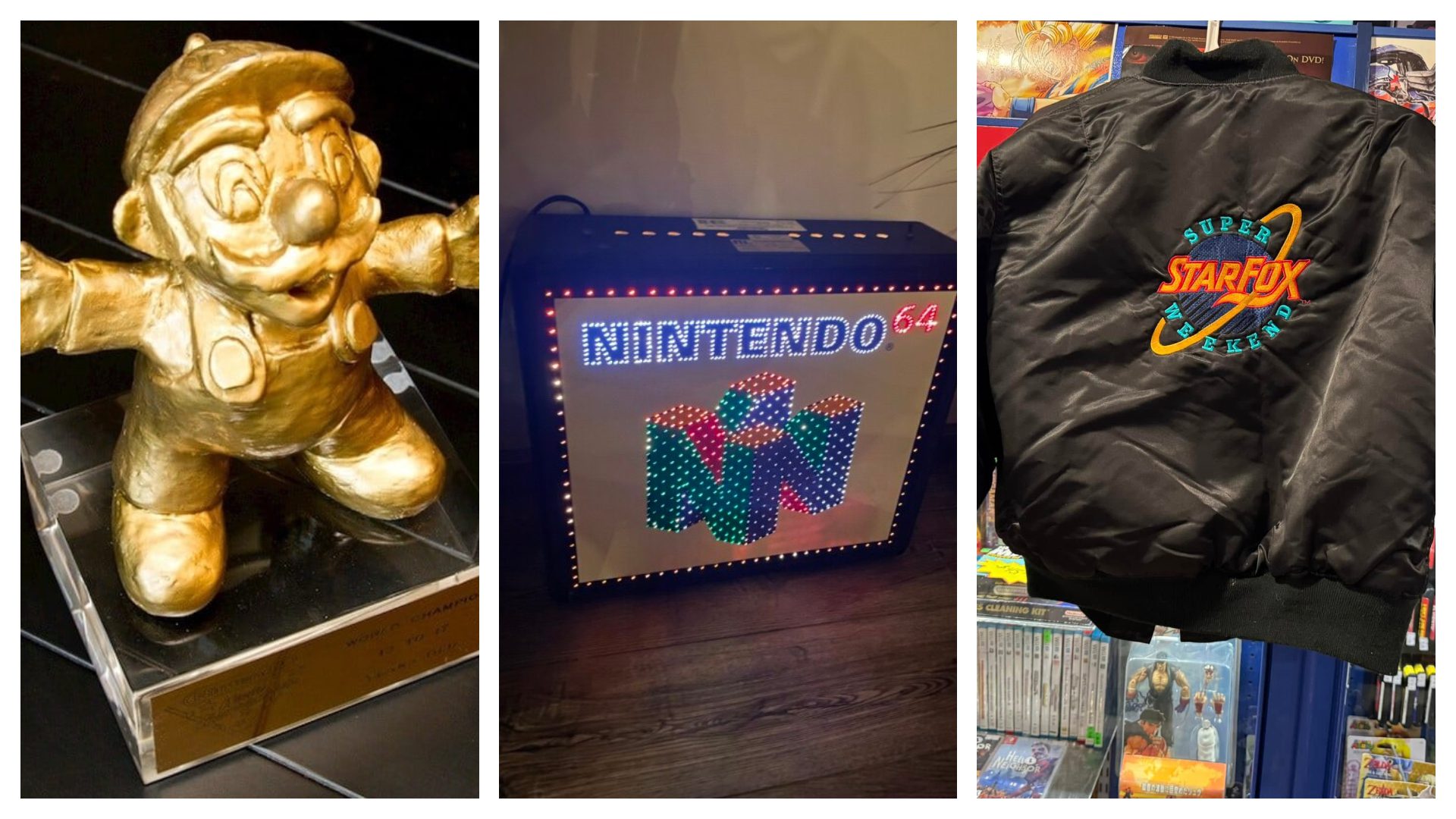
Gaming collectibles are still a major draw for consumers. Just look at how many Collector’s Edition and Deluxe versions of modern titles come packed with statues, art books, steelbooks, and all sorts of extra goodies. Safe to say, most of us still enjoy getting a few trinkets alongside our games. Whether it is consoles or limited print releases, we somehow always find a way to spend money we probably should not on rare items we will most likely never even use.
Among those collectibles, though, a select few have made genuine history. And Nintendo sits near the top of that conversation. Thanks in part to its colorful, cartoon-inspired art style, many of its franchises translate perfectly into display pieces and desk-worthy memorabilia. Of course, that same appeal often makes these items extremely hard to obtain, either because they were produced in very limited quantities or because their prices have skyrocketed over time.
We scoured the internet to round up ten of the most legendary Nintendo collectibles ever made. Some were never even sold commercially and were instead distributed through special events or promotions. Others have practically vanished from circulation. Yet all of them continue to spark conversation among collectors to this day.
The Shiny Stuff: These are the 10 Rarest Nintendo Collectibles
10. Star Fox Bomber Jacket
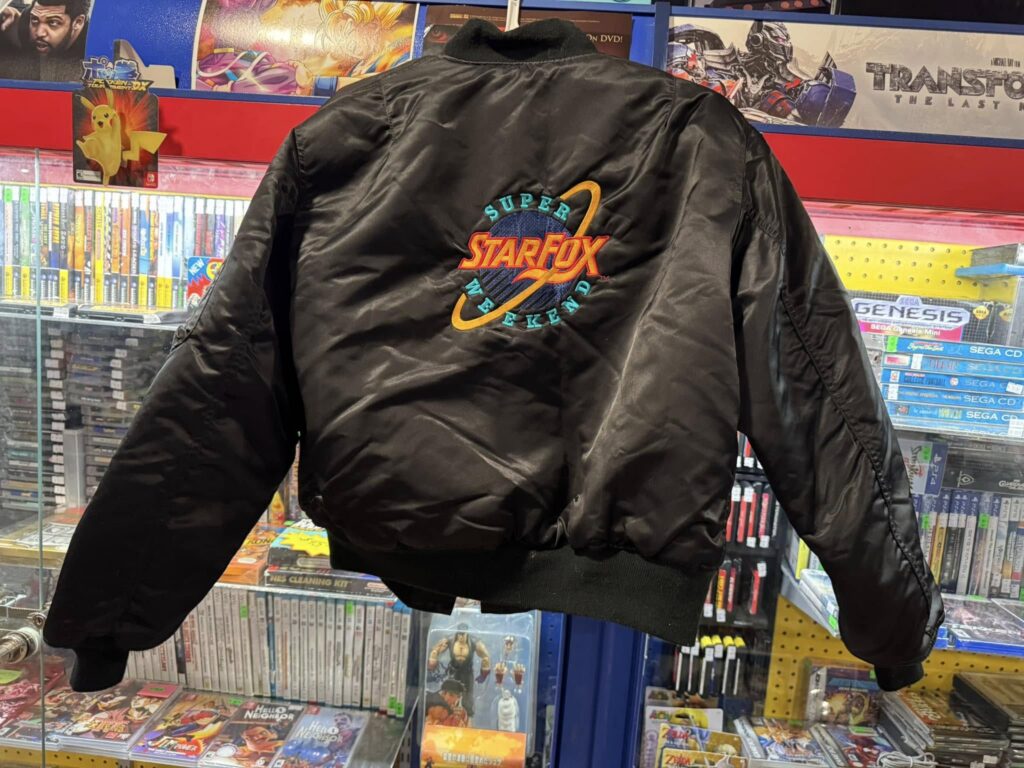
This exclusive piece of apparel was created as a high-stakes prize for the 1993 Super Star Fox Weekend competition. The jacket features the Nintendo logo on the front and the specific event logo on the back, serving as a memento for winners of one of Nintendo’s most ambitious retail tournaments. Winners at each participating store across the country were awarded this garment to signify their top-tier skill in the game.
The jacket’s rarity is defined by its status as a tournament prize, meaning it was never available for regular retail purchase. Its history is further complicated by the fact that leftover stock was distributed as “booby prizes” for second-place winners during the Powerfest ’94 competition. Because these were intended to be worn, many surviving units are in poor condition, making a “mint” jacket a highly exclusive find for collectors of vintage Nintendo apparel.
Today, an original 1993 Star Fox bomber jacket in good condition is a major asset for high-end collectors. Depending on the specific size and the level of wear, these jackets typically sell for between $500 and over $1,000 on secondary marketplaces like eBay.
9. Vintage Bowser Crewneck Sweater
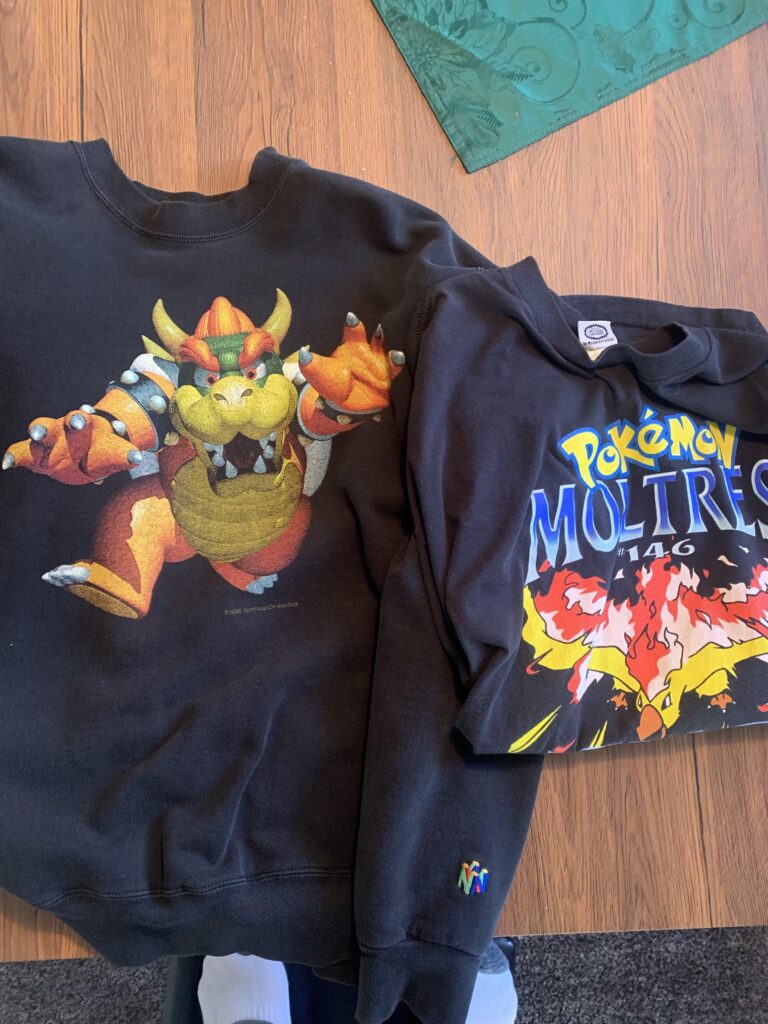
This adult-sized piece of clothing is considered a “holy grail” for collectors of vintage video game apparel from the late 1990s. It features a large, high-quality graphic of Bowser and is praised for a level of construction that has allowed it to survive over two decades of use. Collectors specifically look for “single-stitch” construction and specific manufacturer tags to verify the authenticity of these early Nintendo garments.
Unlike most children’s merchandise, this item falls into the retail scarcity category because adult-sized Nintendo clothing was produced in much smaller quantities during that era. While children’s shirts were common, high-quality adult sweaters were niche items that many people discarded or wore out over time. Finding one today in “flawless” condition is an extreme challenge because most surviving units show significant signs of washing and aging.
While some optimistic sellers have listed this item at conventions for as much as $2,500, the actual market value is more grounded. A vintage Bowser crewneck in good condition typically commands a price between $750 and $1,200 among professional vintage apparel collectors.
8. First 4 Figures Link on Epona (Bronze Exclusive)
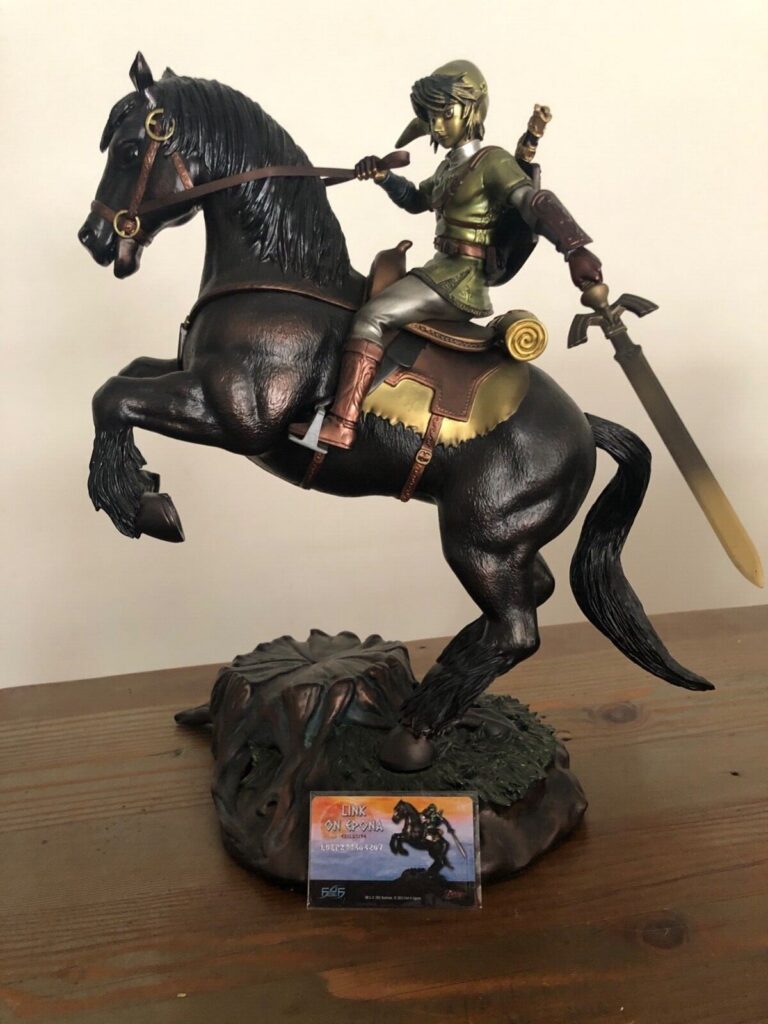
This massive high-end statue depicts Link riding Epona as seen in The Legend of Zelda: Twilight Princess. Standing 17 inches tall and crafted from heavy polystone, it is a flagship piece from the “Master Arts” line by manufacturer First 4 Figures. The statue is known for its incredible detail and is a centerpiece for dedicated Zelda fans.
This specific variant is rare because it was a limited-run exclusive created to celebrate the 25th anniversary of the Zelda franchise. While the standard version was limited to 2,500 pieces, this “Exclusive Edition” features a unique faux-bronze finish and was limited to only 500 units worldwide. Because it was sold through a waitlist system and tied to a major anniversary, it was “unpurchasable” for anyone who didn’t act within a very narrow window.
Due to its extreme weight and restricted production, the bronze edition commands a premium price on the secondary market. Recent marketplace listings on eBay for this ultra-rare anniversary variant have reached as high as $2,800.
7. E3 1997 Legend of Zelda: Ocarina of Time “Oxmox” Statue
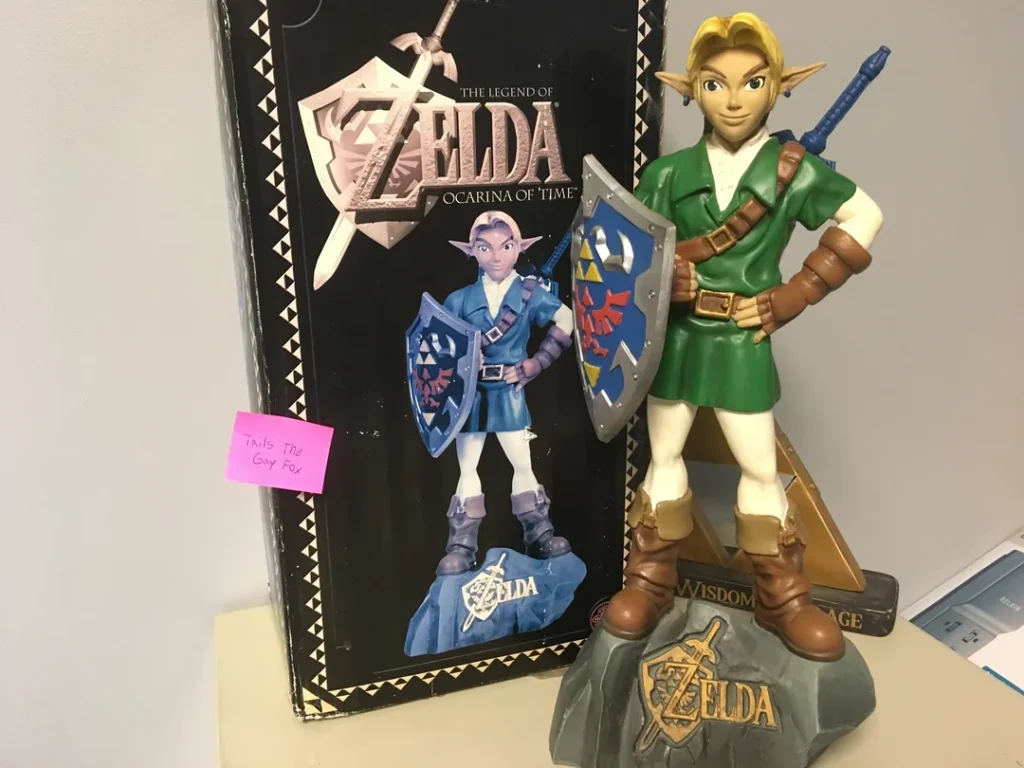
Commissioned by Nintendo and sculpted by Studio Oxmox for the 1997 Electronic Entertainment Expo (E3), this 17-inch statue was used to promote the release of The Legend of Zelda: Ocarina of Time. It features an “Older Link” in a distinct pose that has been noted for its unique appearance. Interestingly, the statue was reportedly modeled after the physical features of Shigeru Miyamoto, the creator of the series.
The statue is incredibly rare because it was a promotional event exclusive, with only 300 units ever produced for the trade show. Many of these units were damaged or lost over the years, and it is common to find them missing removable parts like the Master Sword or Hylian Shield. Its status as a piece of hardware history from the first public unveiling of Ocarina of Time makes it one of the most historically significant statues in existence.
Because of its low production numbers and connection to gaming history, the Oxmox Link statue is a major prize for collectors. Prices on the secondary market vary based on condition but typically range from $2,000 to $8,000.
6. Nintendo 64 Fiber Optic Store Sign
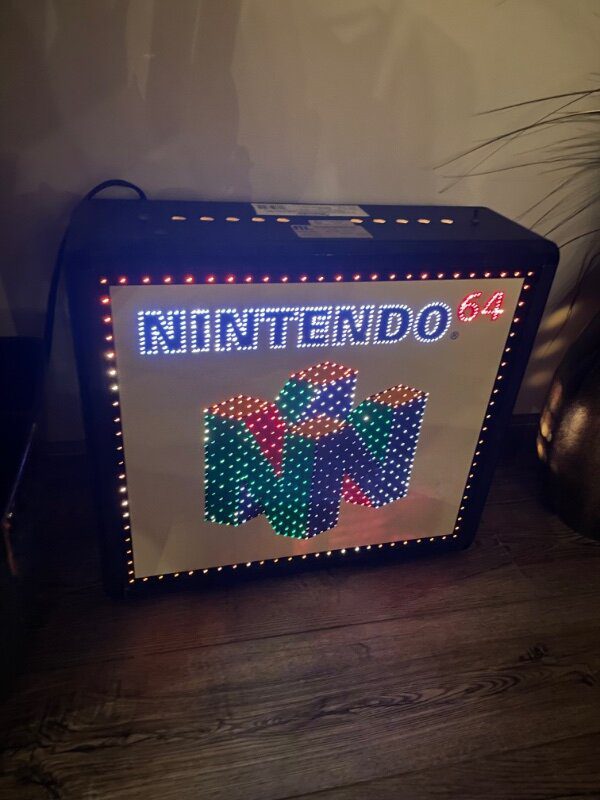
This massive retail display was a landmark of the “World of Nintendo” sections in premium toy stores during the late 1990s. It uses hundreds of glowing fiber optic filaments to create a shimmering, animated logo effect designed to catch the eye of shoppers. These signs were elaborate, high-tech fixtures that represented the peak of Nintendo’s retail aesthetic.
These signs are rare because they were retail fixtures destined for destruction. Once a promotional cycle ended, Nintendo historically issued “destruction directives” to store managers, ordering them to throw these items away rather than sell them to the public. Surviving units only exist because retailers ignored these orders, and since the fiber optic strands are notoriously fragile, finding a functional unit with no broken fibers is a monumental task.
As one of the most visually impressive pieces of retail history, these signs are the ultimate game room centerpiece. A working Nintendo 64 fiber optic store sign recently sold on eBay for $8,750, while older variants from the SNES era have been listed for nearly $7,000.
5. Labo Edition Nintendo Switch
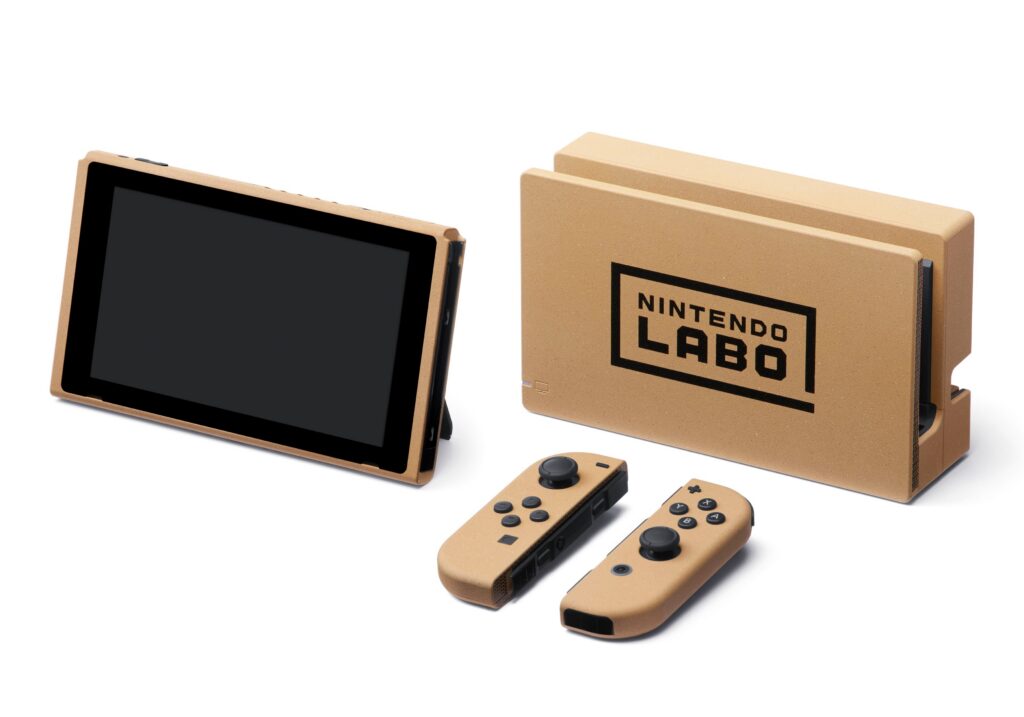
The Labo Edition Nintendo Switch is a unique version of the console featuring a custom paint job and material that mimics the look and feel of brown cardboard. It includes unique Labo branding on the shell and came in a matching cardboard-style box. This unit was created to celebrate the creativity of the Nintendo Labo construction kits.
This is one of the rarest modern consoles because it was a contest prize that was never available for purchase. Only 10 units were produced worldwide, awarded to the winners of a competition for creating the most impressive Labo devices. Its “unpurchasable” status and extreme scarcity make it a legendary item among hardware collectors, most of whom will never even see one in person.
Because so few exist, they almost never appear for public sale, as the original winners often keep them as trophies. Institutional collectors and experts estimate the market value of the Labo Edition Switch to be at least $10,000, with that price potentially going higher at a dedicated auction.
4. Pokemon Battle Trozei Nintendo 3DS XL
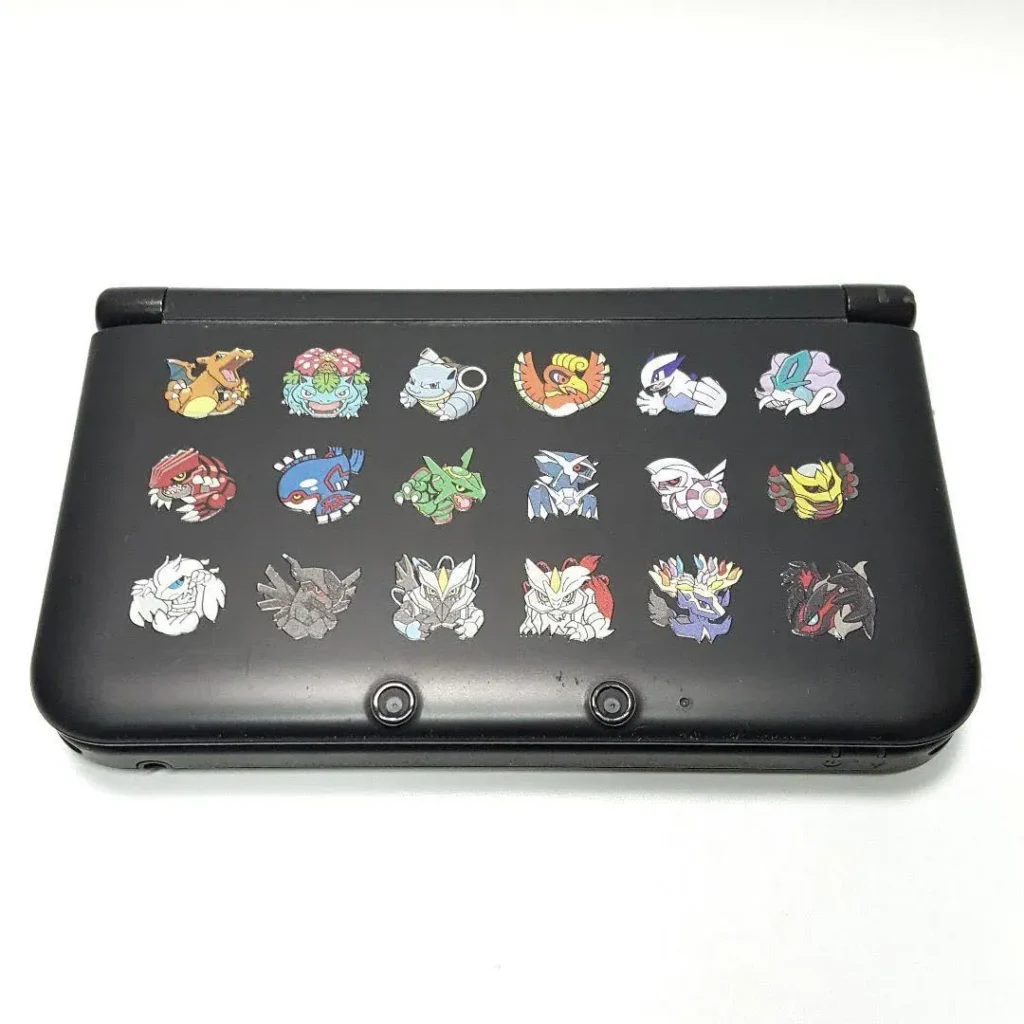
This limited edition 3DS XL features a white shell covered in dozens of small, adorable illustrations of different Pokemon from various generations. It was designed to promote the Japanese puzzle game Pokemon Battle Trozei. Because it is an official Japanese unit, it often includes the original winner’s paperwork, which significantly increases its value to collectors.
This handheld is the “holy grail” of Pokemon hardware because it was a lottery exclusive with only four units ever produced. Two were given to winners of a Pokemon Daisuki Club lottery in Japan, and the other two were distributed through the “Pokemon Get TV” program. It is so rare and valuable that even prominent collectors who own one often refuse to let visitors touch it due to its extreme fragility.
Given its status as one of the rarest official Pokemon items in the world, its price is appropriately high. Experts currently value the Pokemon Battle Trozei 3DS XL at upwards of $15,000.
3. SpaceWorld GameCube Prototype
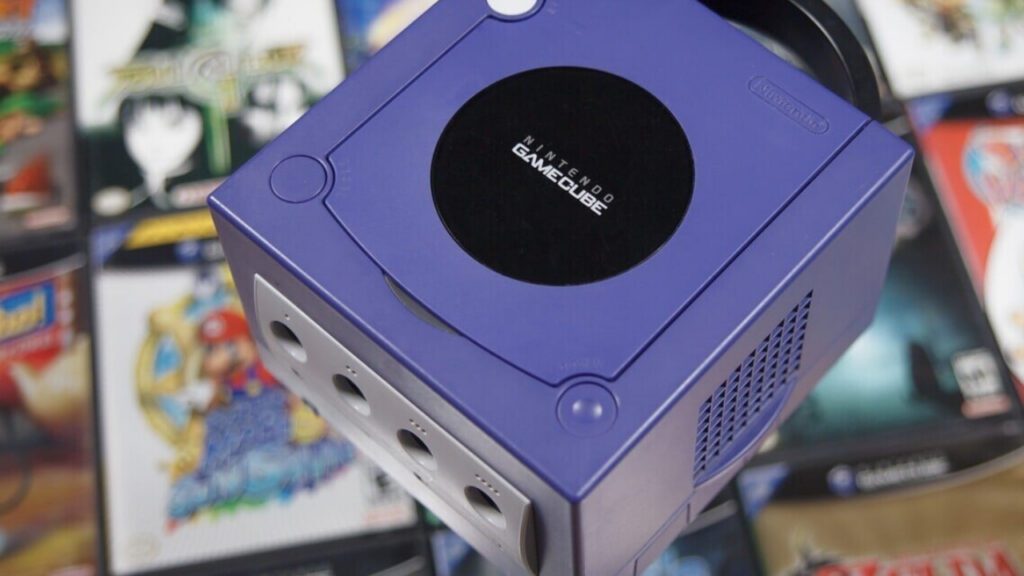
The SpaceWorld GameCube is a unique piece of pre-launch hardware that was displayed at the SpaceWorld trade show (formerly Shoshinkai). Unlike the final retail units released in 2001, this prototype features different internal components and a unique casing finish. It represents a physical look at a console that was still in the industrial design and development phase.
This item represents the highest level of exclusivity: an internal prototype. It is estimated to be a “one of one” rarity, meaning it is the only surviving unit of its kind in the world. While Nintendo produced several prototypes, most were scrapped or held internally, and its existence in the public sphere is a major historical anomaly.
Because it is a unique piece of industrial history, its value is set by the very few collectors capable of buying it. A SpaceWorld GameCube prototype was recently listed on eBay with a price of $100,000.
2. 1990 Nintendo World Championships Gold Mario Trophy
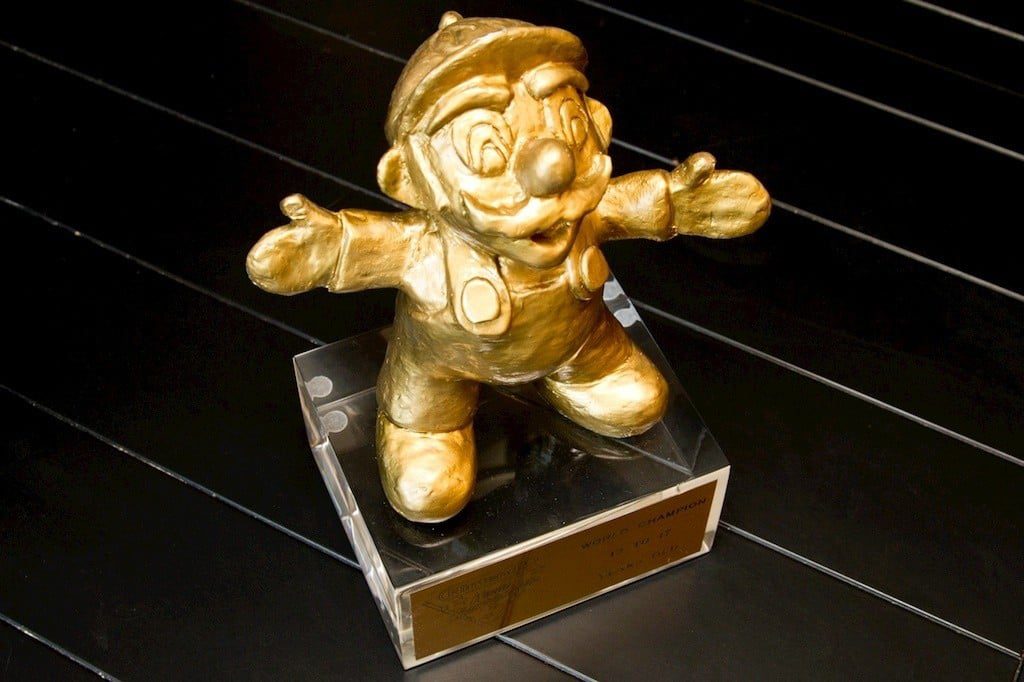
This trophy was awarded to the finalists of the 1990 Nintendo World Championships (NWC), the most famous video game competition in history. The trophy features a gold-painted Mario figure standing on a tiered base. It was the ultimate prize, awarded alongside a new car, a TV, and a savings bond to the top player in each category.
The Gold Mario trophy is a tournament prize even rarer than the legendary NWC gold cartridges. There are only three gold trophies in existence—one for each of the three age categories (Under 11, 12–17, and Over 18). For decades, none of these surfaced publicly until Thor Aackerlund, the winner of the 12–17 bracket, decided to sell his one-of-a-kind award.
This trophy is viewed by many as the “holy grail” of competitive gaming memorabilia. When it was placed on eBay in 2012, it had an eye-watering “Buy It Now” price of $300,000.
1. Nintendo PlayStation Prototype
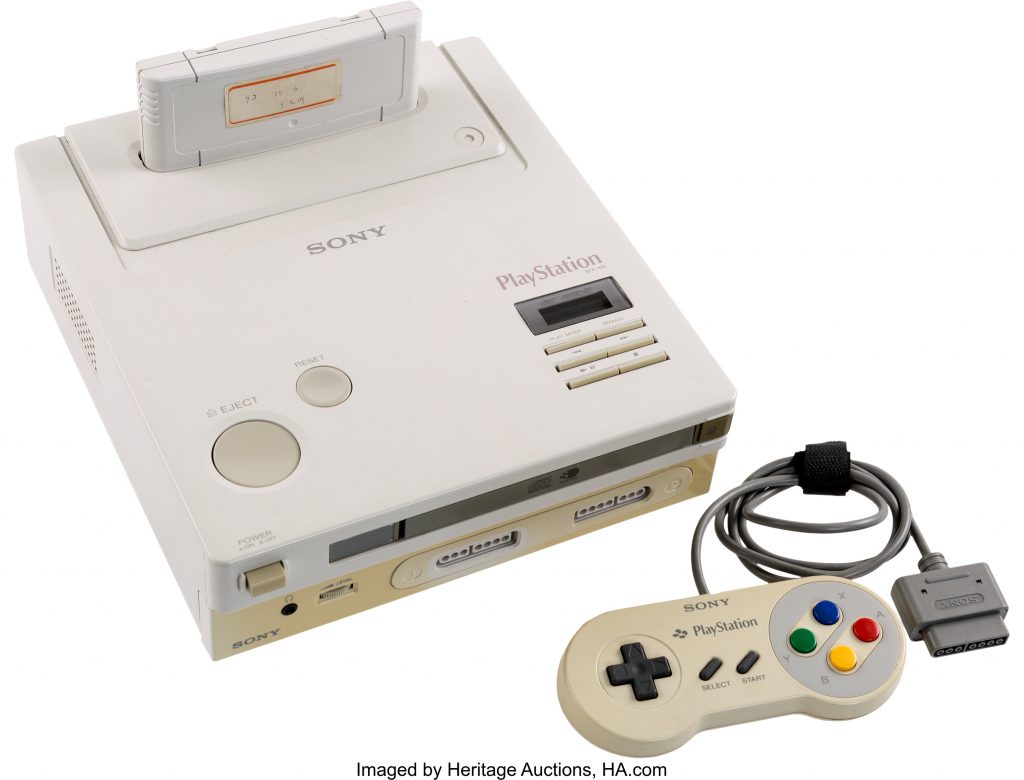
The Nintendo PlayStation (officially the Sony-Nintendo SFX) is a hybrid console that features both a SNES cartridge slot and a built-in CD-ROM drive. It is the result of a failed early 90s partnership between Nintendo and Sony that was intended to bring CD media to the SNES. After the deal collapsed, Sony used the knowledge gained to create the standalone PlayStation, changing the industry forever.
This is the ultimate industrial prototype, a “missing link” that was never intended for public hands. While roughly 200 prototypes were made for executives, the vast majority were ordered to be destroyed once the partnership ended. This is the only known functional unit in the world, discovered by a former employee of a company where a Sony executive had once worked.
In 2020, this specific prototype was sold at auction, setting a world record for a non-software Nintendo collectible. It sold for a staggering $360,000, making it the rarest and most expensive piece of Nintendo history you could potentially own.