
We might be on the verge of seismic industry shift in mobile gaming, as the Brazilian government just dealt a major blow on Apple’s “walled garden” practices for app distribution through its App Store systems on iOS, iPadOS and macOS.
Essentially, the iPhone maker has reached an agreement with Brazil’s Administrative Council for Economic Defense (CADE, in local acronym) that effectively dismantles the mandatory tie-in between Apple’s app distribution and its payment processing, forcing the tech giant to open its iOS ecosystem in Latin America’s largest market.
Now, usually, this type of news tends to find its home on tech-based blogs — and they have, as Brazil’s Tecnoblog and iHelpBR as well as US’s Engadget have talked about this — but there is an underlying topic of discussion about the whole thing, which is mobile gaming. And despite the decision being reached recently (CADE’s dispatch came out on December 23rd), this has been a longtime coming.
A timeline of the Apple-CADE clash
Like we said, the whole discussion about Apple opening up its App Store in Latin America wasn’t a “won overnight” scenario, but rather a three-year contentious affair started by Mercado Livre, an e-commerce giant born in Argentina, but incredibly popular in Brazil.
In essence, in December 2022, the e-commerce brand filed a formal complaint against Apple, accusing the Cupertino-based company of abusing its leading position within the app distribution market by imposing problematic practices — Apple’s charges of 30% commissions over apps downloaded through its digital store, for instance.
If you’re having feelings of déjà vu, congratulations on your excellent memory: this is pretty much the same situation that led to the Apple–Epic Games spat from a few years ago, that led to Fortnite being banned from Apple products and the Epic Games Store not having an official app downloadable through the iPhone’s digital front.
The Mercado Livre situation went back and forth until November 2024, when CADE’s General Superintendence issued preventive measures against Apple, effectively preventing the company from blocking external payment links. In practical terms: apps distributed through its store would still have to pay the 30% increased charge, but Apple could no longer stop users (and companies) from offering or downloading/installing apps from other sources.
Apple, being Apple, appealed. And between May and June this year, the company saw itself coming and going off courtrooms in order to debate the whole thing, all attempts failed and regulators recommending a formal condemnation for market abuse. December 23rd came, and CADE received notification that Apple had chosen to settle matters, effectively agreeing to the government entity’s demands.
Now, it has until April, 2026 to implement all technical changes on its ecosystem within the country.
Ok, but how is this connected to gaming?
Very.
One of the key mandates of this settlement is that Apple is completely forbidden from claiming exclusivity on app distribution and payment processing. In short, the company will have to accept if consumers want to get their apps from elsewhere, and also cannot stop companies from offering said apps through their own means and their own payment systems.
This is not new, per se: just the latest chapter on a long story of Apple facing similar defeats in courts in Europe, for instance, where the EU mandated a similar decision a few years ago.
And much like there, Brazil’s decision can bring a positive impact on mobile gaming, in the form of…
Alternative app stores, brand activations and the return of Fortnite
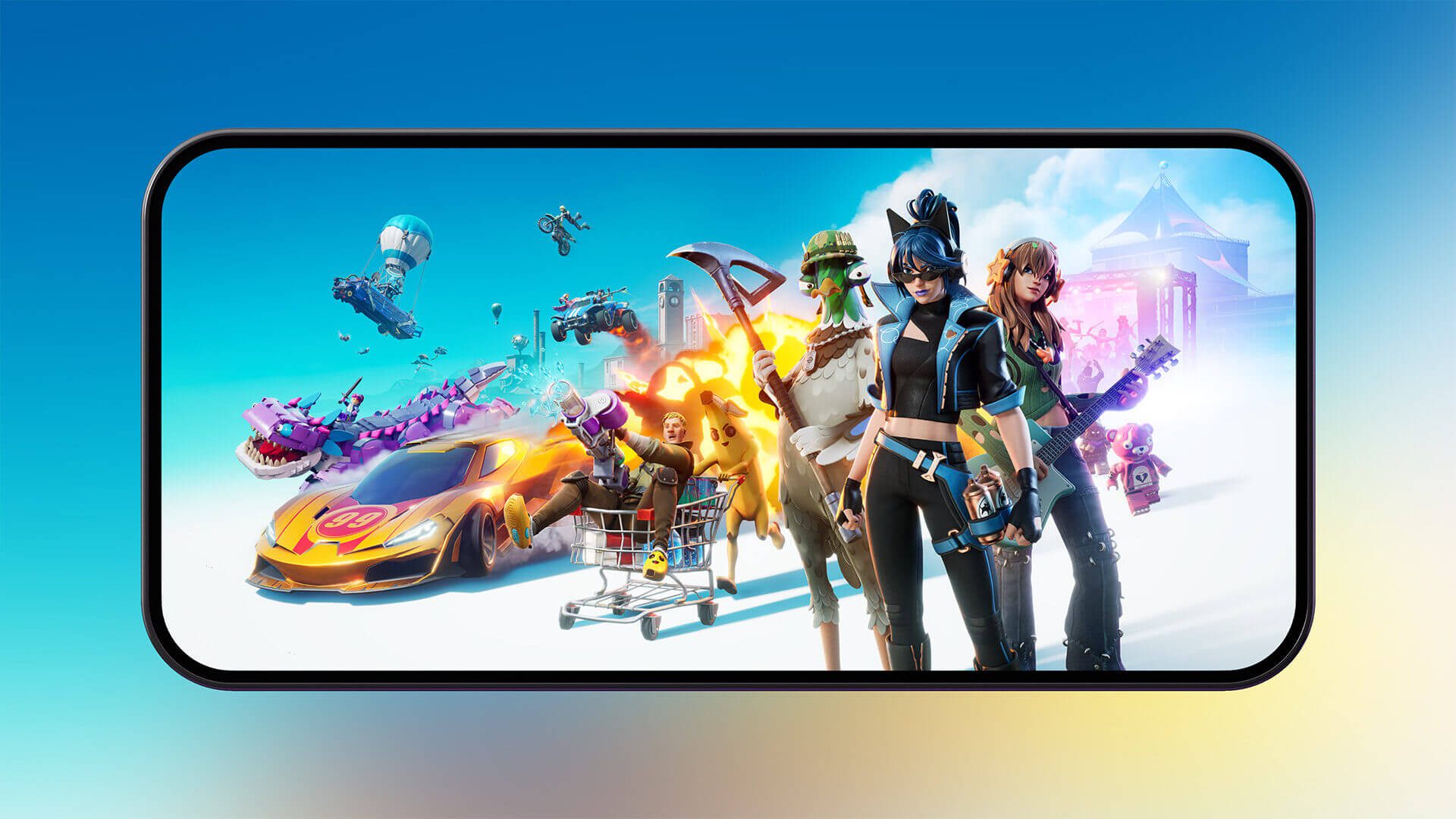
The most obvious, visible change for players will be the arrival of third-party app stores. This means that the Epic Games Store and other brands that engage in similar practices can finally launch natively on iOS in Brazil, allowing hits like Fortnite to return as direct downloads rather than through cloud-streaming workarounds.
Fortnite is actually a good “numbers” example of why this matters: Brazil answers for around 5,5% of the game’s global userbase, according to Demand Sage. That’s about 35.75 million of a total number of 650 million registered players.
Brands have taken notice of that, as Fortnite has also allowed very popular brands like O Boticário (one of Brazil’s key beauty, cosmetics and perfume product sellers), Guaraná Antárctica (the country’s top soda drink behind only Coca-Cola) and even state-owned oil company Petrobrás all promoting brand activation events within the game’s open platform systems.
So there’s money to be made in case Fortnite gets even more popular through a streamlined, non-workaround process of getting back into the iPhone, which stands for 15.87% of Brazil’s mobile operating systems market as of November 2025 (thank you, StatCounter!).
We may also see specialized marketplaces, such as a dedicated Xbox Mobile Store, offering unique loyalty rewards and curation that differ from Apple’s official store.
Cloud gaming goes native
It is historically accurate to state that Apple’s “per-product” review rules have given companies like Microsoft and NVIDIA a hard time on selling their cloud-based solutions — Xbox Cloud Gaming and GeForce Now, respectively.
Due to the restrictions imposed by Apple, there are no official app interfaces that “talk” to the iPhone’s iOS structure, and users that manage to access those platforms on an Apple-made device, usually have to do so via workarounds, such as logging in through browser surfing, for instance.
Under the new Brazilian rules mandated by CADE, these providers can bypass the standard App Store restrictions, which paves the way for high-performance, native apps that offer feature parity with their Android counterparts, moving away from the often-clunky web-browser versions players currently use.
Lower fees and cheaper microtransactions
Yeah, about that 30% tax? CADE’s mandate calls for a more flexible fee structure. Oh, the tax itself still exists, but not only has it been reduced, there are several other options for developers to approach.
Basically, if developers use clickable external links to process payments on their own websites, Apple will now charge a reduced 15% fee. If a developer simply uses static text to inform users about external payment options without a direct link, Apple collects…zilch, nada, 0%.
For high-volume titles like Genshin Impact or Free Fire, these savings could be passed down to the consumer, potentially leading to cheaper V-Bucks, Gacha pulls, or Battle Passes.
Look, as a crew, PRG seldom celebrates anything related to microtransactions, because we like to be cheapskate gamers — no wonder we have a Deals page. But we will party like no tomorrow if something that makes you spend less comes around.
Speaking of which…
Monetization efficiency through Pix
Donald Trump hates it, but it’s true that Brazil’s “Pix” payment system is something that the US should take some inspiration from.
For context: Pix is Brazil’s government-backed instant payment system, allowing 24/7 transfers in under two seconds via banking apps — any banking app, mind you, as this is not a corporate solution, but a government one, tethered to the country’s financial and technology infrastructures. According to Brazil’s Central Bank, just under 170 million people already use it as their main transaction tool for payments of all scales, from small groceries to car and home pay installments.
By using simple keys like phone numbers or QR codes, it eliminates fees for individuals and the need for credit cards — in fact, you can also link Pix to your credit card limit to overlap the benefits from both fronts. In 2024 alone, over 11 trillion BRL (just under the $ 2 trillion ballpark) have been transacted through it.
And Apple does not accept it as a viable way of payment. Google, though, does it and encourages it.
Now, with the new decision and its mandates, developers will have access to the following:
- Higher Margins for Developers: Traditional credit card transactions (Apple’s primary IAP method) carry fees of 2-5% and are plagued by chargebacks. Pix transactions cost roughly 0.33% and have no chargeback mechanism, protecting developers from “revenue clawbacks” where users dispute charges after spending in-game currency.
- Better Conversion Rates: Merchants in Brazil see an 18% higher checkout completion rate when offering Pix. For mobile games like Free Fire, which rely on microtransactions as low as R$ 1.00, the ability to use Pix—combined with Apple’s lower fees—makes small-value purchases much more profitable.
- Subscriptions via “Auto Pix”: The settlement aligns with the rollout of recurring Pix payments (Pix Automático), which is coming sometime between 2025 and 2027. This will allow developers to offer subscriptions and seasonal passes without the high costs and volatility of credit card expirations associated with Apple’s native billing.
At any rate, we still have to wait and see how this will all play out on Apple’s side. Most of the things speculated here are very real possibilities — Google’s Android does allow for most of them, for instance — but it also depends on how Apple will edit out its own technology in order to allow for all of this.
From the company’s site, they are being…well, they’re being Apple: notoriously cagey. One statement I saw on social media says that CADE’s decision will hamper iOS’s security by making it too open etcetera — nothing they haven’t told us before and lost.
Still, CADE’s mandate stands. It’s not a matter of “if” Apple will do it: it’s a matter of “when.”