
So, Brasil Game Show (BGS) has reached its 2025 edition with a new venue and a lot of ground to cover — while also being PlayRatedGames’s very first meetup as our own head honcho, Mikhail Manfredo, traveled all the way from New York to São Paulo to attend the event with me.
And while the show does have some other, amazing things to offer — Square Enix’s Naoki Hamaguchi and HIDEO FREAKING KOJIMA are the main attractions — BGS 2025 is trying to recover some of its long lost audience that only cares about the games.
And “games” it has — plenty of them, in fact: among long released titles that got some recent updates, demos for things that are yet to come out and even a lot of indies, Brasil Game Show (yes, with an “S”) does have a good number of options for your gaming needs.
So, in between Mikhail’s video works (which will come out on YouTube later) and this article, here’s everything we played at BGS 2025:
Brasil Game Show 2025: The PRG highlight picks on the event’s games
Sonic Racing Crossworlds



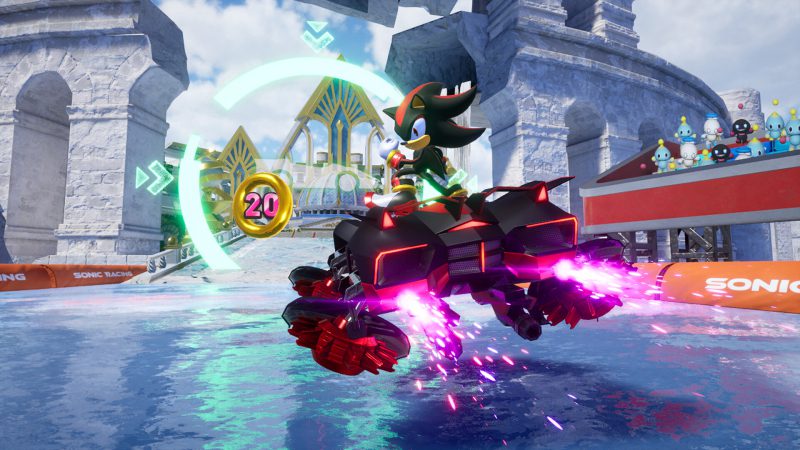
You’d be forgiven if you thought SEGA’s latest gaming outing was your average Mario Kart clone with a blue hedgehog instead of a red plumber. But the truth is not only that’s far from it — it’s actually better. We know, we’re surprised too, but we finally saw why most reviews on the game praise it as filling a racing game gap that Mario Kart World has, so far, failed to do.
eFootball (mobile and PS5)


Konami’s legendary football franchise (we are not calling it “soccer”, Mikhail, and I am done having this conversation!) formerly known as “Pro Evolution Soccer” is still…well, a football game through and through. Distancing itself from the old EA SPORTS FC rivalry and embracing the online/eSports scene was one of the Japanese publisher’s most intelligent decisions to be made, but that was quite some time ago. The game itself still looks dashing, and player movement still looks funny. But the experience of starching our own Mr. Manfredo on a 3-0 final score kind of balances it all out, making the entire playthrough enjoyable — and not much else.
On mobile, though, the game looks decent, but gameplay-wise, the on-screen controls do it little to no justice. It’s easy to see the icons getting in the way of actually watching the players…play, and we couldn’t help but feel like it would benefit greatly if it had an external joystick attached so the screen could be entirely dedicated to the visuals.
Bloodfang


Bloodfang is an independent third-person hack and slash with a smudge of soulslike spice, under development by Bruno Torrão’s Ignite Dreams, a Brazilian independent studio that’s currently looking for a publisher in order to fully launch the game.
Don’t be lulled into a false sense of security like we were: despite the colorful looking and the intentional choice of avoiding the dark, gritty aesthetic from most soulslike titles, one would be easily fooled into thinking this game is a type of Kena: Bridge of Spirits clone…it’s not: enemies on screen are relentless, attacking from all sides and bringing several, different methods of torturing you with varied degrees of difficulty.
It’s not as challenging as, say, Elden Ring, for instance, but it does fool you long enough for them to get a few, hurtful hits in. Combat is fast paced, combo-based and requires a mix of skillful dodging, well-timed blocking and well-placed attacks to succeed. Also, you’re playing as a buff, sword-wielding humanoid rabbit with a penchant for unbridled violence, which is always weirdly cool.
Sadly, our experience with the game on the studio’s provided laptop ran into a snag, as the device’s fan wasn’t working properly, which made the GPU run hot and the game started lagging heavily. However, when we switched gameplay to a ROG Ally, things ran as they should, flowing smoothly and highlighting the game’s fast pace.
Bloodfang is coming out on Steam eventually, and the studio intends to also release it on consoles if a publishing deal comes through.
Mongil Star Dive


“Oh, this looks Genshin Impact-y”, an increasingly interested Rafael exclaimed as he approached the demo station. The idea was to showcase Samsung’s Odyssey 3D gaming monitor (the station was setup on their booth — arguably the largest of the entire event), but the game itself does drink from HoYoverse’s fountain, while giving it its own flair with a much more fast paced combat and a character switch system that feels more meaningful if compared to other, similar offers.
Dialog looks interesting enough, although the demo itself was too short to make a fair assessment, but as exploration and gameplay go, this one might be a solid choice when it comes out. The game is current in its pre-registry phase on Netmarble’s dedicated page.
Double Dragon Revive


There’s something about classic style beat’em ups that just draws me every time games as Double Dragon Revive comes around. In this case, specifically, Arc Systems Works’ capacity of taking on the nostalgia brought by the classic game (much of it from older people like my near-40-year-old butt) and mix it with modern-day elements like a 3D movement perception in a side scrolling progression does this game wonders.
I did see a handful of media from this game before, but this was my first time actually playing it: one of my fears was that the studio would focus too much on implementing new stuff in order to appease the “remake to update” crowd, but much to my satisfaction, this was not the case: the demo available at the BGS show floor is pretty sizeable — two or three stages and a tough-but-not-impossible boss fight, with a good variety of enemies being offered to you early on, requiring some strategic thinking to beat everyone on screen.
Having said that, I did run into a weird snag where one enemy got stuck in a part of the first scenario and wouldn’t get out. As that part was already unreachable for me, I was unable to progress further (classical beat’em up requires you to take out every enemy on the screen in order to advance) and had to restart the demo. Luckily, this was early on the first stage so I didn’t lose much.
Double Dragon Revive comes out on October 22 on PlayStation 5, PlayStation 4, Xbox Series S|X, Xbox One and Windows.
Guilty Gear Strive


While I’m not one for the modern day online fighting game competitive scene, I do enjoy engaging in the occasional virtual fisticuffs. Having said that, Guilty Gear Strive was one of my “missed” list of games, which is now a regret. At Brasil Game Show, I had the opportunity to correct that as Arc System Works reintroduced the game in a demo that shows their new updates — mainly, Lucy from Cyberpunk Edgerunners as a playable character (which came in August, originally) and the new collaboration skins from the 1.50 updates, which are Edgerunners-themed and give the game’s characters some of the Netflix anime’s looks.
Also, Brazilian Portuguese support for captions and menus, finally…
One of the things that actually got me pleased with this is that the studio didn’t take the easy route here: every single one of Lucy’s skills and movements were not only drawn from scratch, but they do feel natural for the character. I loved her in Edgerunners and, at first, I thought it would be more fitting if Guilty Gear Strive had brought David Martinez instead of her — you know, him being the protagonist and all.
After playing with her, though, it did feel like she was right where she belongs: if Edgerunners didn’t exist and Lucy was an original character for this game instead, it wouldn’t feel out of place at all.
Marvel Cosmic Invasion


Speaking of beat’em ups, Dotemu’s Marvel Cosmic Invasion was a blast. I’m sure it would still be incredibly fun to play alone, but I got the opportunity to play alongside Bonus Stage’s Rodrigo Sanches, a good friend and a popular Brazilian gaming podcaster, as we caught up on the show floor. And this was a key part in my favorable experience.
Marvel Cosmic Invasion is the kind of game that just feels like it was created to play together, in person, with a buddy alongside you just talking nonsense in between button mashing and beating up thugs in colorful clothing. That alone evokes nostalgic feelings of gaming’s old days, when you would invite someone to your house to just fire up anything and set up two controllers for a quick session.
That said, it’s not like Marvel Cosmic Invasion is focused on the old stuff: the game has some new, contemporary features that sets it apart from a lot of other options on the genre — the ability to choose more than one character and switch it in fight gives the game a more strategic feel to it (my comically buffed She-Hulk mopped the floor with any grounded enemy, but struggled with airborne foes, which were piece of cake for my second, quick-footed and “aerially agile” Spider-Man).
Meanwhile, the old school hit-and-run mechanics of setting up combos, running away then back for another round still worked wonders, while another button was mapped for a more powerful move that either cleared the room from potentially overwhelming enemy numbers, or made for a cool-looking finisher at the very least.
Tupi: The Legend of Araribóia


As soon as I saw this indie’s booth and read its name, I became interested: “tupi” is the name of one of the largest indigenous tribes in Brazil before its colonization, and as such, it has a lot of native south american motiffs and visuals that, at first, made it look pretty interesting to try.
Notice that I said “look”, because the end result was not great: I’ll chalk it up to the demo being on a somewhat early stage of development and ignore the aestehtical errors (English and Portuguese wording on the same phrase, code-related terms evident on the UI, some jittering), but even taking those out of the equation, The Legend of Araribóia was not pleasant.
Araribóia is the game’s main character in this turn-based roguelite that brings a lot of things from South American folklore, which is nice. But while the game does show its inspiration from older-gen RPGs, its implementation is not up to par: there is a kind of “role/job” system that simply changes Araribóia’s color scheme and abilities, but they’re both so negligible you won’t build strategy to fight enemies.
You see, you navigate through a directional-based map that branches into a handful of directions and you can find treasures, other characters (mostly, animals from local folklore) for your party, and enemies. The thing is, most fights feel like those “idle play” games you see on any mobile store, with a few inputs here and there for skill use. Nothing really stands out here, just a bunch of characters on screen moving left to right and right to left while hitting other characters and…not much else.
And then there’s the imbalance of certain boss fights: in one time, my demo brought me to this boss that had area-of-effect healing capacities that cured my enemies more than I could hurt them, which led me to an endless loop of getting great hits in only to see my damage negated completely.
I won’t say it is a bad game, but it was a weird demo. It felt like it wasn’t ready to be showcased on such a major event and this did little justice to the actual Araribóia, who was a real person, a war hero that joined forces with the Portuguese after his people (the temiminós, a Tupi offshoot) were driven out of their land by the tamoios, who allied themselves with the French.
I hope they iron out these details and the final product whenever it comes out. Currently, it is sitting on a “to be announced” release date on Steam.
Deep Dish Dungeon

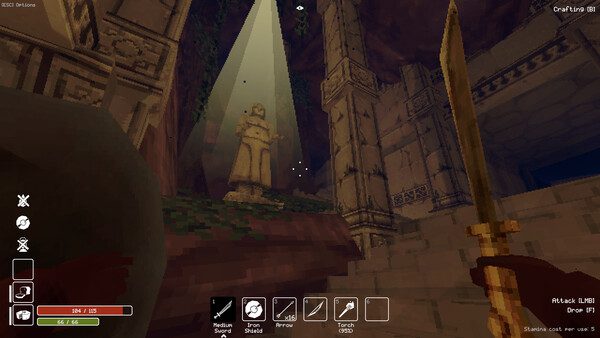


As far as dungeon crawlers go, you can’t really go wrong with Deep Dish Dungeon, a survivor-based exploration game developed by Behold Studios and published by Raw Fury (of Dandara, Blue Prince and Kathy Rain fame). The simple looks deceive the player into thinking this is a simple, short “find item X to open door Y” type of game, but what lies beneath is a deep, detailed layer of item customization, equipment crafting, a simple-yet-engaging combat and a lot of running around.
One of the game’s main highlights is that it also contextualizes the adventurer’s (you) health, reminding you to be fed and hydrated at all times and…well, decreasing those levels if you sprint, scale or fight too much. These all can have an impact on your performance which, in turn, adds a degree of strategy on maintining external resources as well as your own, biological ones.
It is a simple proposition contained within a 20-minute demo, but quite the engaging one nonetheless.
Capy Castaway
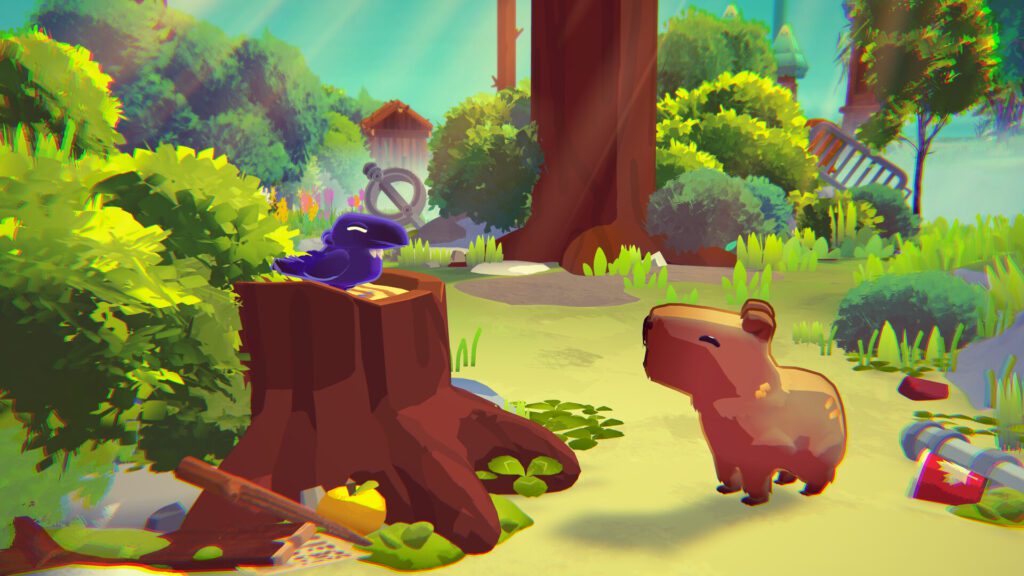
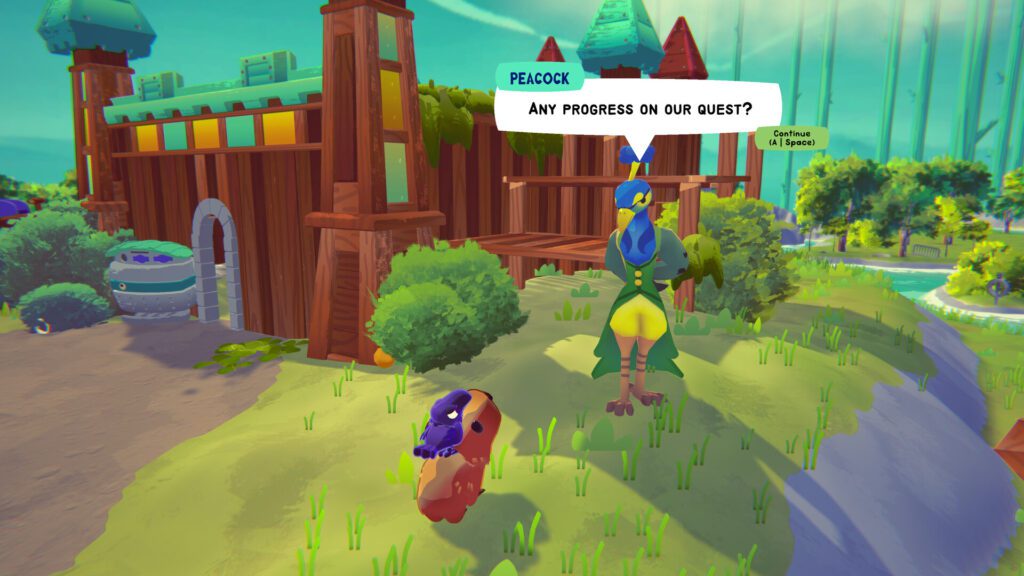


You’re either a baby capybara that washed up on the shores of an unknown island or the crow flying overhead trying to help the big rodent…do stuff. And yet, it was one of the most fun experiences we had on the entire show.
Meant to be played in pairs, Capy Castaway has the cartoony, almost chibi-like looks you’d expect from a game this colorful, and its challenges are not that tough, although some degree of difficulty is to be expected (Capy can fall off a bridge and get stuck as she, a baby, is incapable of climbing steep hills, for instance).
The idea is, both characters have to be pretty much on the same screen — no split screen — in order to progress, uniting efforts in order to fulfill several objectives. And by “efforts”, I mean fly overhead, dig, bite, grab and everything both animals are capable of in order to gather resources, build and all you can to advance.
Sadly, there’s still no release date for this, according to the game’s Steam page.
Wedgetail


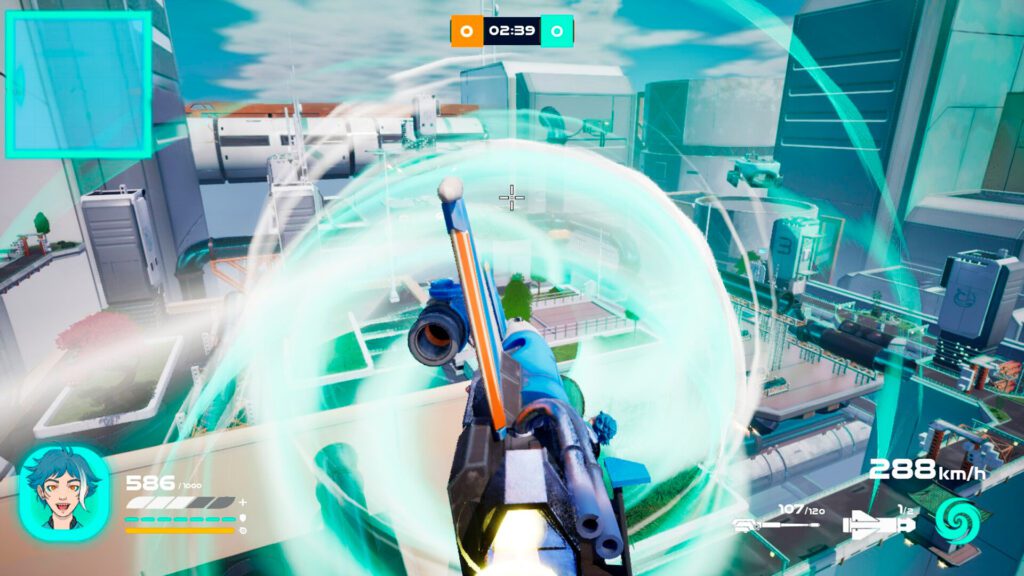
In a simple, cut and dry description: Wedgetail is Overwatch, except with futuristic looking fighter jets dodging and weaving lasers, bullets and buildings up, down, left, right and center. This alone got me excited and I’m not even an online type pf gamer.
In Wedgetail, each 4×4 PvP match can be set up in one of several game modes, from a free-for-all, duke-it-out battle of you versus everyone until a good variety of team challenges, particularly a tower defense-like one where you hack the opposing team’s base for a take over, but at the same time, need to protect yours, bringing a degree of strategy to a fast-paced combat system.
The characters are also pretty likable, although we didn’t get much in the sense of lore in a 20 minute demo. The game, whenever it comes out, will be free to play, so this might be one to be on the lookout for.
Baki Hanma: Blood Arena


The only game already out between all the indies on this list, Baki Hanma: Blood Arena is what you get when you put together the titular anime of the comically strong 17-year old Baki in a game that drinks heabily from the Super Punch-Out fountain.
Although, at a first glance, the game looks exactly like Nintendo’s classic title but with a famous anime standing in place of Little Mac and Glass Joe, for instance, there is a small level of intelligence at play: the game pulls you into this mind trap of a tutorial that eases you up to the point where you believe you can just spam high punches away until the fight’s over.
Yeah, that’s the last thing you wanna do: as soon as button’s get mashed, the opponent will eventually break through your onslaught of punches with powerful moves of his own and, given that this is Baki Hanma, all of those moves have a severe impact, greatly cutting your life bar like it was never there.
We don’t know if you’ll be able to choose other characters — BGS’ demo made you fight as Baki, against Kiyosumi Katou. But from the game’s Steam pagem there are screens that show others, like Alai Jr., Kaio Retsu and main antagonist Yujiro “The Ogre” Hanma himself.
Like we said, the game was released in September, on, well, everything except smartphones.