
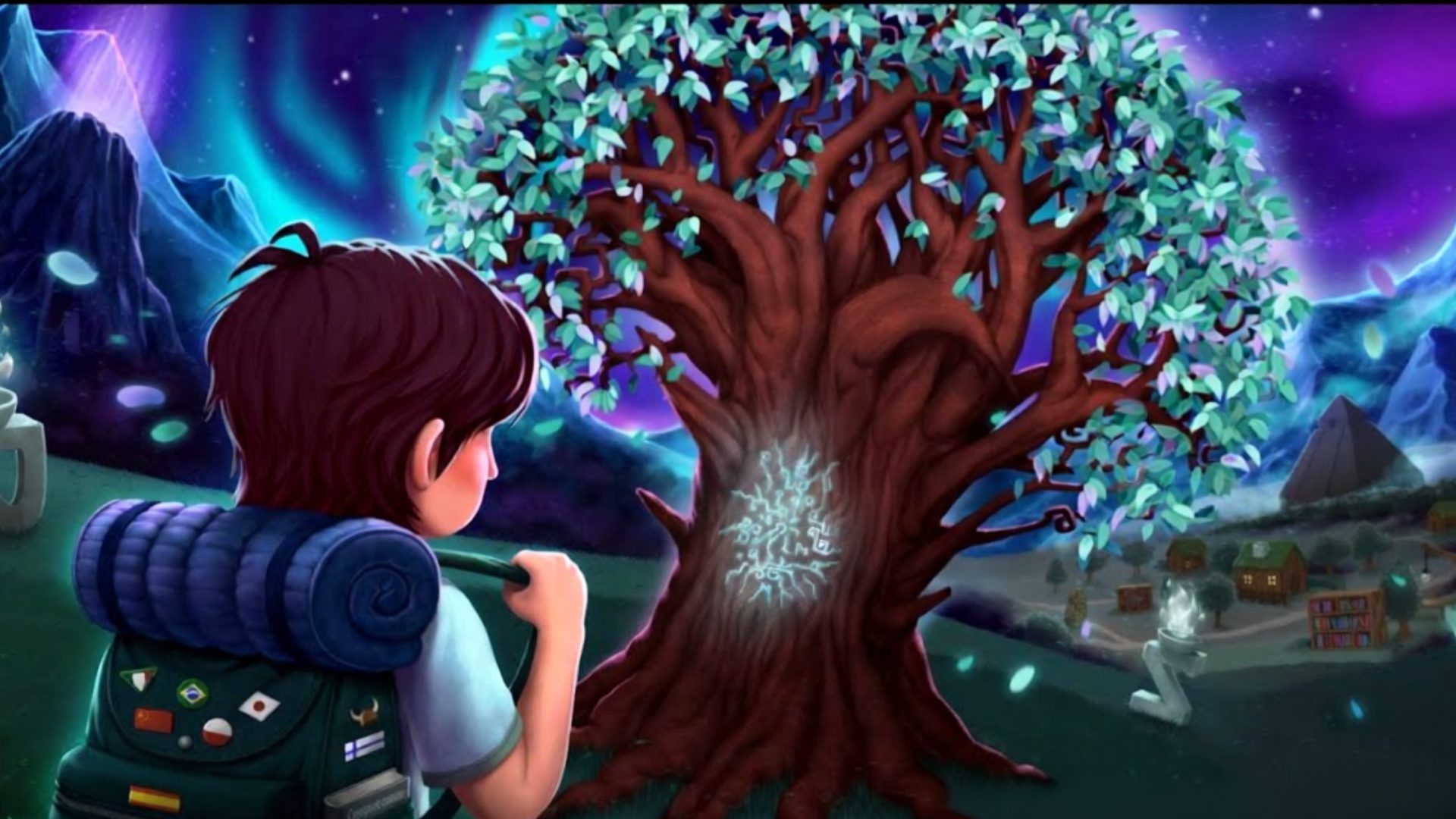
I’ll be the first to admit I’m a bit of a softie when feelings are involved, which usually leads to people thinking I have cute, awww-inducing interactions with my friends — I really, really do, unconditionally. But the opposite is also true, and emotions related to sadness and loss have their way of getting to me, especially in videogame form. Grief-inducing moments like Ghost of Tsushima’s last fight or that one thing in Final Fantasy VII do put me in uncomfortable places most of the time…
Such is the case with Master Lemon: The Quest for Iceland, an indie effort from Brazil’s Pepita Digital — a truly, deeply crafted artistic take on a true story that pays homage to friendship and love between two souls.
Presented to you in top-down perspective, this indie game’s visuals bear a striking resemblance with other pixelated endeavors — Sabotage Studio’s Sea of Stars was the first that came to mind for me, although their similarities end there — and is highly dependant on scenario exploration and visiting the same map many times over the course of its own, five-hours-or-so narrative, to deliver something truly, strikingly beautiful.
But despite its RPG-like presentation, Master Lemon: The Quest for Iceland has little to do with the genre: there’s no combat, no level upping, no XP collection — in here, it’s all about the story, and finding elements that help you tell it the way it’s supposed to.
Master Lemon: The Quest for Iceland Review
The game puts you in the shoes of André Lima — “Lemon”, if you’re one of his buddies. You see, our intrepid protagonist is a polyglot who nurtured a profound desire to travel to Iceland after graduating. Being nearly self-taught, Lemon (“Limão”, in Brazilian Portuguese) kinda had a knack for languages and linguistics.
However, before making his dream trip a reality, a freaky detour takes him to the Bashir Islands, where he’s positioned as this fated savior against a memory erasing plague that threatens to destroy all languages in the world.
And this shows throughout the game, as one of the very first mechanics introduced to the player is how word-learning opens up new paths for you to explore. Despite the “Iceland” in the title, though, you’ll learn countless words in several languages, from countries in every continent.
One of the very first words you’ll learn is “gambiarra” (spoiler: do NOT bring the hard “R” when speaking this in Brazilian lands: our “R” sounds like English’s “H” in most situations — “gam-bee-a-ha” is the way to go for you English folk). This is Brazil’s term for “macgyvering” something — kinda like twisting a screw with a coin because your screwdriver is missing. In this case, though, “gambiarra” is a gameplay mechanic that allows you to combine seemingly uncombinable items to create just the thing you need to advance.
These are more than just tools of exploration though, as some words help you power up a fog-clearing ability that I’ll get into in a minute, while others are more contextual-based, with some characters’ feelings directly connected to an expression or figure of speech you’ll have to discover by playing, unlocking progression.
It’s a nifty little gameplay trick that will cover up about 80% of your session with the game, but it’s one that, as little and common as it is, will find you taking your time navigating through Master Lemon’s menus and inventory screens just out of sheer curiosity: “how do you say X in Y language” and so on — I can’t say for sure if this was the creator’s true intention or just a happy coincidence, but I couldn’t help to feel a bit naturally curious about languages overall, much like the lead character’s back story.
Clear the fog, clear the mind
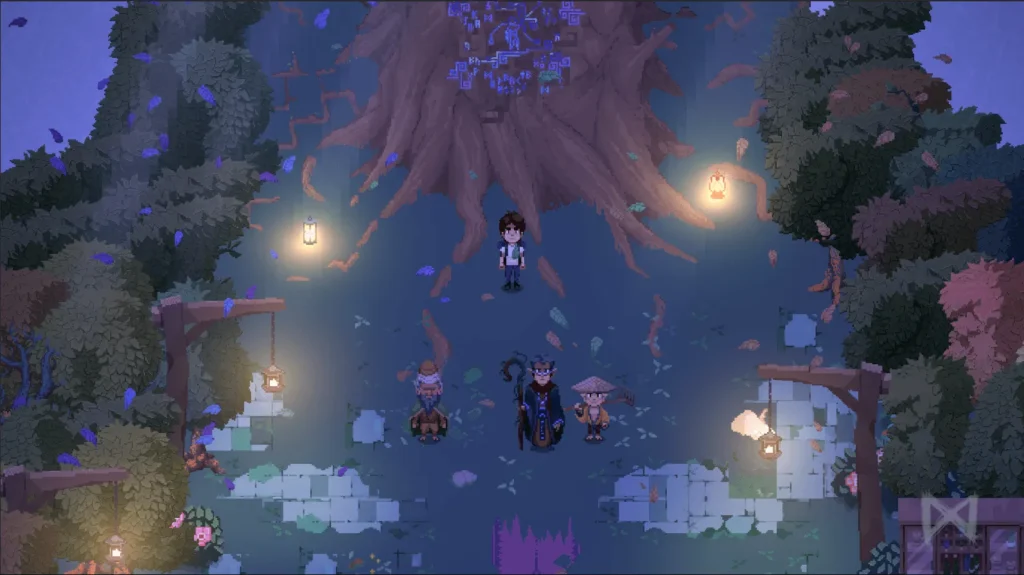
Pretty soon in the game, you’ll come across several regions that are covered by a thick fog — which you’ll have to clear as you develop some sort of “mind-push” ability that negates them, opening up new areas in previously inaccessible places and, with them, new items, people and words to interact with.
That’s the core experience of the game, and one you’ll be doing most of the time, mind you. But it is so well-knit into Master Lemon’s narrative structure that nothing feels silly or shoe-horned: it all…fits. Not in the physical sense, obviously: we’re not reaching our hands out in empty space or squinting our eyes to try and manifest mind powers through fog — I’m talking about how the metaphor of pushing the fog out is almost immediately understood by the player, in the sense of “oh, this is helping me think clearer.”
Granted, there are several layers of fog…let’s call it “thickness”: the barely-gray looking is the first, and the one you’ll immediately be capable of handling. As the game progresses, you’ll improve your mind pushing ability (by learning new words everywhere you go), which will allow you to increase your powers to clear the darker gray and fully black ones.
This is an old open RPG trick that forces the player to revisit previously traversed levels in search of new secrets to unlock — one I particularly miss a lot in this modern era of “one and done” action RPG progression systems, by the way — but like I stated earlier: these small genre innuendos are as close as you’ll get to calling Master Lemon: The Quest for Iceland an RPG itself. It’s not.
And the thing is, I have a hard-time naming a proper genre for this game, because…
Despite being called “adventure”, Master Lemon has a bit of everything
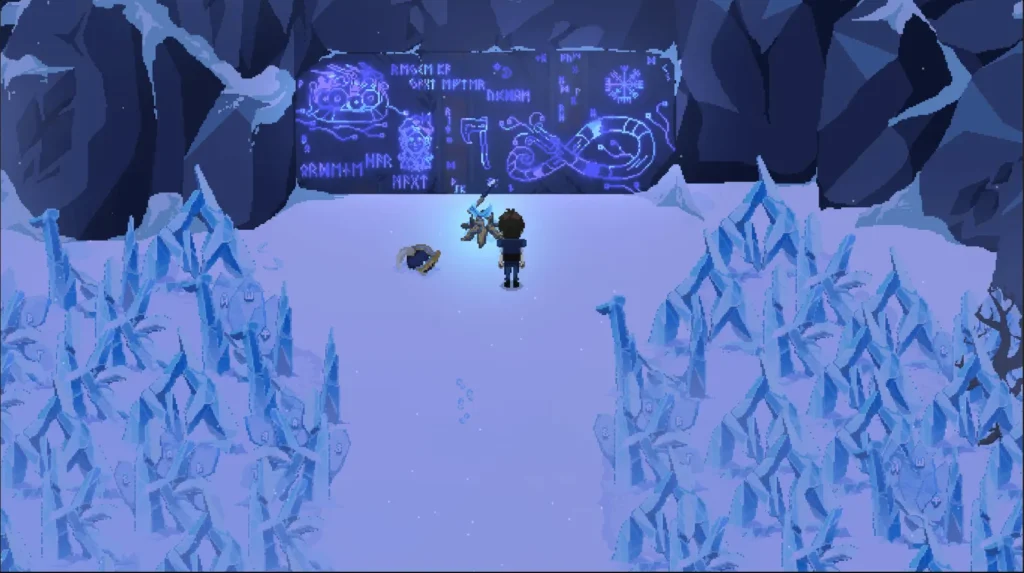
It’s easy for a gamer to define “action” by the combat mechanics of whatever’s running on their platform of choice. But how can I say this for a game like Master Lemon: The Quest for Iceland, where combat is completely non-existent? In fact, speaking in practical terms, you can’t really “fail” in the game, and given that there’s no Game Over to speak of, the sense of urgency that usually comes with failed action sequences is also nullified.
Well, it’s not an “action” game, but it does bring the action to you through storytelling, weaving the narrative into a “chosen-one-to-save-the-world” type of overarching scenario where Lemon, obviously, is the so-called being destined to fulfill such fate. Throughout the entire gameplay experience, you’ll see moments where you’ll forget you’re playing what’s supposed to be a true story and focus too much on the metaphysical tools and their impact — especially in “dream within a dream” type of sequences that permeate the entire session.
Moreover, other genres also seep through the cracks, showing how these conventions are, well, mere conventions, and any gameplay rule that’s supposedly imposed on us can be misconstrued to be/do something else.
Now, normally, I’d chastise this — I kind of have a problem with games that try to “be everything” and end up half-assing their way into the credits: there’s nothing memorable there, no “whoa” moments to speak of, and you’ll usually forget about those unless they’re brought up in very specific scenarios of your life.
But not here: the thing about Master Lemon is that its intention is clear from the get-go. There’s a video of Daredevil’s actors, Jon Bernthal and Debora Ann Woll, where she (a longtime Dungeons & Dragons player and dungeon master) teaches him the basic concept of any D&D session: it’s not about “winning”, but it is all about telling a great story.
Now, the difference between Master Lemon and a D&D session is, of course, that D&D allows you to create a story as you go. Pepita Digital decided to go for another route, and The Quest for Iceland does have its set, fixed narrative pieces — you’re stuck to those, try as you might to change them (and I did try. A lot.), they’ll always come out first, front and center.
It is based on a true story, after all: the game’s protagonist was one of the best friends of Julio Santi, Pepita Digital’s CEO. And everything you see about Lemon is rooted in truth, but taken for a fantasy ride. You’ll note, though, that I said “was”, not “is”: you see, in real life, despite fulfilling his dream of travelling to Iceland, Lemon would not survive the trip, as his life was sadly cut short by a car accident.
Despite not being created to be a sad story, Master Lemon: The Quest for Iceland does have a “grieving” feeling looming over it, and as you progress towards the game’s end, you’ll also have to deal with that part of life as well. This is not necessarily a spoiler, as Lemon’s fate is told in the game’s opening.
But there are bits and pieces here and there where Julio himself shows up, mostly as a supporting character and a major narrative piece in one of the game’s smaller arcs, where a particularly tear-inducing video reel of him, very much in real life and b-roll looking, explaining the “tribute to you” intention of the game: that’s not even the ending, but it serves as the introduction to it — kinda like a “oh, that’s how I know its coming” moment.
Master Lemon is a quest for teaching how you can still smile through grief
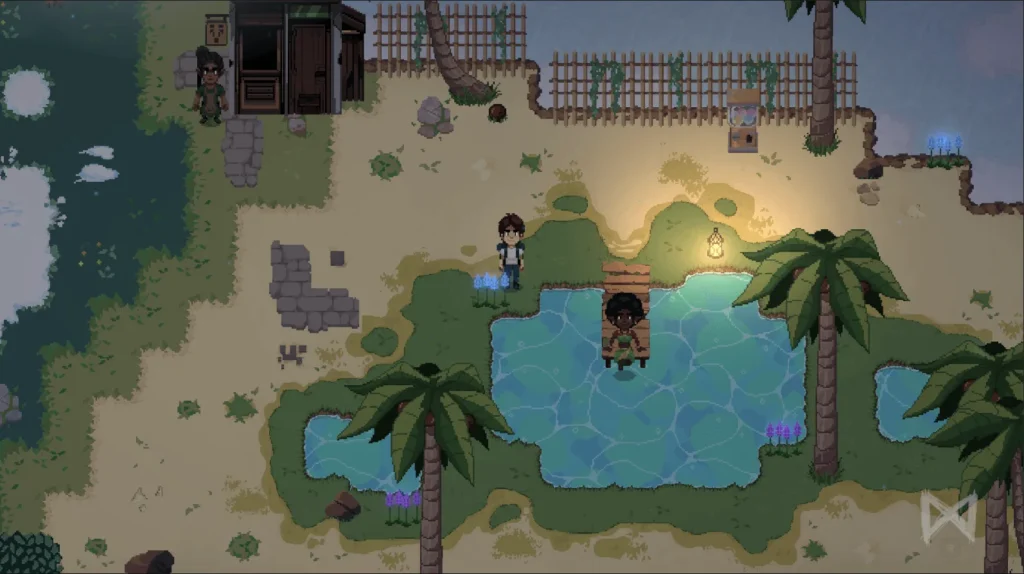
Despite its intention thrown at you from the get go, Master Lemon: The Quest for Iceland is not a sad game. Pepita Digital did not make this title by leaning in on how they miss Lemon, but to recognize the impact of the way he lived his life — overcoming doubt, people trying to err him away from his dream, his own problems with the career he chose for himself and barely (if at all) living it — these are all elements that shows us that, essentially, if he did, so can we.
Julio himself is part of this, in fact: not to get all spoilery, but the man wanted to be a theater, drama-oriented actor before making a career switch for filmmaking and, eventually, game director — this is in the game. As an antithesis for Lemon’s insistence on becoming a linguistics specialist, the entire premise is “regardless of choosing to persist or choosing to change, both are fine.”
As someone who had to deal with loss during most of the pandemic and at least one depression-related departure of a friend earlier this year, I still have issues when trying to conform with all of those.
But somehow, Master Lemon’s storytelling resonated with me in a good way. Not too personal, but not too separated from my own experience as well. And because of the way its story is crafted in the game, “it’s gonna be fine” does get a nicer ring to it than merely saying that phrase out loud.
Master Lemon: The Quest for Iceland is available for PC (Windows and macOS), PlayStation, Xbox and Switch.