The United States Patent and Trademark Office (USPTO) has granted Nintendo a patent that has been generating quite the upheaval as of late.
According to the public documentation, the “Big N” has submitted a patent request titled “Storage medium, information processing system, information processing apparatus, and game processing method” (here’s the full, 45-paged PDF).
Yes, that’s a problem, but not for the reasons you might be thinking.
Nintendo patent, the “summon” problem, all explained

For starters, as represented in the above image, here’s the abstract from Nintendo patent submission, now approved:
“An example of an information processing system moves a player character on a field, based on a movement operation input. The information processing system causes a sub character on the field, based on a first operation input. When an enemy character is placed at a location where the sub character is caused to appear, the information processing system controls a battle by a first mode in which the battle proceeds based on an operation input. When the enemy character is not placed at the location, the information processing system starts automatic control of automatically moving the sub character. The information processing system moves the sub character, based on a second operation input, and when the enemy character is placed at a location of a designation, the information processing system controls a battle by a second mode in which the battle automatically proceeds.”
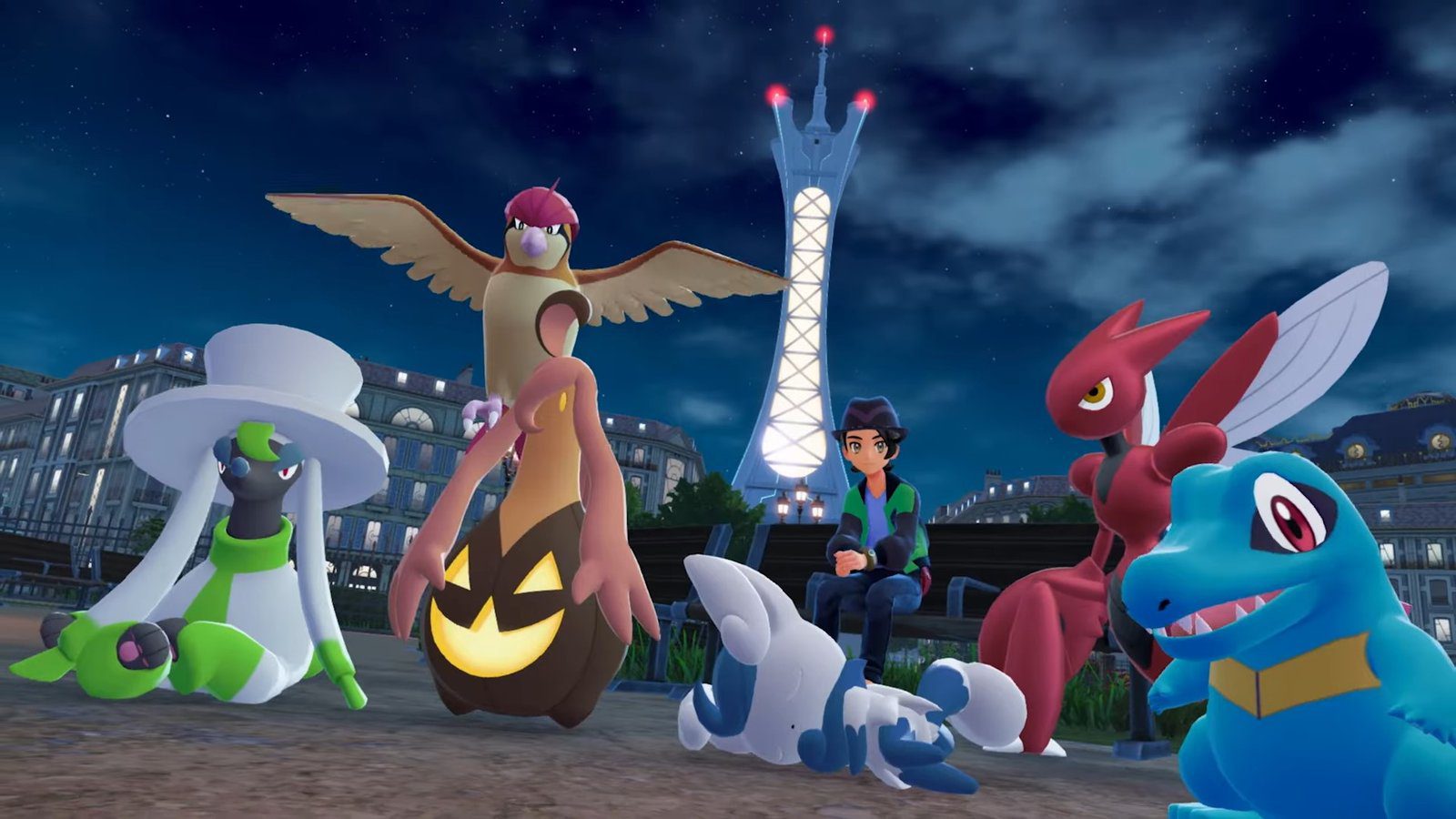
That’s a lot of legalese, but many outlets have already done the proper interpretation of it: summons. This Nintendo patent relates to game features like “summoning monsters to fight for you”. Granted, this is not any summon, only those you can assume control of—directly or not. The document’s wording is extremely vague, and therein lies the problem.
You see, “controlling summoned monsters”, at a first glance, makes us think of Pokémon, which is an obvious thought, given Nintendo’s stake in the pocket monsters franchise (and Pokémon Z-A’s release on Switch and Switch 2 right around the corner, no less). But exactly because the wording is so vague, a lot of people have started to claim this can be a problem for any summoning feature, as long as there’s a degree of control about it.
Think of it like this: Final Fantasy VII, the 1997 original, offers summons, but no control. You choose a specific command on a menu and an animation of said summon beast takes over the game, is played in its entirety, then the control is given back to you, after the summoning ended.
Now, Final Fantasy VII Remake changed that mechanic a bit, and summons will not only fight alongside your characters in real time, you also get to choose how they perform, by selecting which attack they’ll use next turn, if and when they’ll move in for an ultimate attack, or dismiss the summon entirely. See? Control.
Now, does this mean Nintendo will sue Square Enix and you never get to call on Bahamut’s help again? Well, no. You see, the idea is not to win lawsuits. Nintendo would lose, badly, if that was the case: several legal experts (who criticized USPTO’s approval of the patent, I might add) have stated that the mere capacity to prove previous, published work that came before the patent even existed would be more than enough for any judge to dismiss the case.
Final Fantasy has had its summons since its third game…in 1990. Nearly 20 games later in the franchise (and one of them being entirely about summons, plot and gameplay-wise), it’s is next to impossible they would change it now because Nintendo said so.
Then why? Why should this “Nintendo summoning patent” exist in the first place? Why would USPTO allow the company to go about requisitioning a patent for such an obvious, historically used feature?
Muddying of the Waters
The answer, according to legal experts, is “to deter competition”. According to games industry lawyer Richard Hoeg (thanks, Eurogamer!), this is a strategic move to leverage the high cost of litigation. Because lawsuits, regardless of winning or losing them, are expensive to maintain—and even if you do manage to beat Nintendo in court, the company has millions at its disposal to appeal and keep the battle going, effectively wearing you thin, either of patience or finances.
“The filing for such patent protection indicates that Nintendo does intend to pursue a legal strategy in defending itself against entrants in the pocket monster genre,” Hoeg told Eurogamer. “But that strategy may or may not involve lawsuits, as the ‘muddying of the waters’ effected by the patents existence may be enough to deter investment in and creation of competitors. That is, if Nintendo looks like it could pounce, that may be enough. No actual pouncing required.”
This is where the patent becomes a powerful tool. Its existence alone is enough to muddy the waters and create the perception that Nintendo could pounce, which can be enough to deter investment in and creation of competitors without any legal action actually being taken.

The “Schoolyard Bully” in Action
Like we said, Nintendo does not wish to engage in legal contention with any company comparable to it in size. However, smaller studios, indie developers and other small-scale gaming production teams would be fearful to even consider defending themselves given the fact that, win or lose, Nintendo could just keep the legal ball rolling.
In short, it’s a “schoolyard bully” type of strategy—one where the mere presence of a bully will make you surrender lunch money: you’re afraid of getting beat up, without actually getting beaten up.
Another lawyer heard by Eurogamer—former chief legal officer at The Pokémon Company, Don McGowan—pointed out how this strategy would never work if Nintendo tried it against, say, Sony or Microsoft, or even smaller-but-still-big companies like the aforementioned Square Enix: “I wish Nintendo and Pokémon good luck when the first other developer just entirely ignores this patent and, if those companies sue that developer, the developer shows decades of prior art.”
Still, the gaming community did not take it very well: in a now over 500 comments on Reddit, this thread has a lot of people sharing a lot of opinions, memes and legal considerations about Nintendo’s latest maneuver. Some even took the time to remind their readers how predatory Nintendo can be when it comes to protecting its IPs litigiously—let’s just say “emulators” is treated like a sinful word inside Nintendo’s church.
Why This Is Just Another Day for Nintendo
At the end of the day, though, Nintendo doesn’t really care that its public image will suffer for this: they’re already seen as a difficult company to deal with, so what’s one more badmouth adjective hurled towards it?
Still, the company knows it got away with a lucky shot on this one: the reason why the Nintendo patent’s wording is so evasive in the first place is because, were it more accurate and precise, the submission request would’ve been denied right away. And since Nintendo wants the patent, but not the legal contention that might come with it, getting it approved was not a “first step”, but the “only, very tough-to-take” step.
Lucky for them, it paid off. Or rather, it might, in the future, should any small developer be scared out of their wits at the possibility of fighting Nintendo over this.