

The video game industry can be a cruel mistress, often measuring success through single-minded lenses like review scores or sales numbers. Not that those are inherently wrong, but because of that approach, many potentially good games end up falling through the cracks and getting thrown into the “failure” bin. Either that, or the game itself is so bad that not even its potential can save the effort put into developing and releasing it.
This is a tale of the latter, as we revisit history and list several games that bombed for one or multiple reasons, yet have concepts so interesting that we can’t help but feel they deserve a second chance.
Oh, and the last one… that will get people talking.
Too Human
- Original Platform: Xbox 360 (2008, re-released on Xbox digital store in 2019)
Too Human sucked. No way around it. I reviewed it when it came out, back in my magazine days, and gave it a solid 5 out of 10. Readers actually got mad at me for “being generous.”
For a game that spent nearly ten years in development hell and featured a deeply controversial control scheme that mapped melee combat to the right analog stick, meaning no traditional camera control, critics were even harsher. Most pointed to its repetitive level design, unresolved cliffhanger ending, and notoriously long, unskippable death animations, where a Valkyrie slowly retrieves the player’s body, as the main reasons for its failure.
It was so bad that Too Human was even legally “wiped from existence” for several years following a lawsuit between Silicon Knights and Epic Games, which forced the developer to recall and destroy all unsold copies.
Despite all of this, the game had an interesting concept. Its overarching plot reimagined Norse mythology as a futuristic sci-fi epic, featuring a deep class system, extensive loot mechanics, and a unique “Norse-cyber” aesthetic that was widely praised. Fans appreciated the “god-like” feel of combat and the potential of its narrative world, arguing that most of its flaws could have been fixed with more polish and refinement.
The Order: 1886
- Original Platform: PlayStation 4 (2015)
Jesus, what a ride this one was. The Order: 1886 was one of the early showcase titles for the PlayStation 4, designed to highlight the console’s technical capabilities and generational leap. And it was crucified.
Not because it looked bad or played terribly. For a third-person shooter with photorealistic visuals, it performed reasonably well in an era where frame rates were not yet a major concern for players. Its alternate-history Victorian England setting, filled with werewolves and folklore creatures, paired with eerie environments ranging from dark sewers to fog-covered alleyways, made it visually striking. Think Peaky Blinders, but with monsters and a heavier gothic tone.
But it was short. Very short. So short that the story barely had time to develop, and most of its political twists and betrayals felt rushed. While HowLongToBeat estimates around 10 hours for completionists, that is generous. The game can be finished in about five hours.
Today, however, many see it as a misunderstood technical marvel. Its seamless transitions between gameplay and cutscenes still hold up, and its world-building and weapon design, like the thermite rifle, were genuinely impressive. It deserves another shot, especially in a traditional development cycle where a solid first entry leads to a stronger sequel.
Advent Rising
- Original Platform: Xbox, PC (2005)
Advent Rising became a legendary disaster because it was marketed as the beginning of a massive sci-fi trilogy but ended up being one of the buggiest games of its time. Ragdoll physics glitches could literally cause a player’s arm to lock and explode, and server issues led to the cancellation of a million-dollar in-game contest.
Its narrative also suffered because it was meant to be the first of three parts, leaving players with an incomplete story and an unresolved cliffhanger. If you think Mass Effect: Andromeda had bad bugs, those were nothing compared to Advent Rising.
Underneath the technical chaos, however, was a genuinely interesting concept. The game flipped the alien invasion trope by portraying humans as godlike beings worshipped by other species.
Players could evolve from standard gunplay into using powerful abilities, making combat feel increasingly dynamic and satisfying. Combined with a strong soundtrack and ambitious storytelling, it remains a flawed but fascinating game that many believe deserved better.
Lair
- Original Platform: PlayStation 3 (2007)
Lair failed spectacularly because it was forced to act as a tech demo for the PlayStation 3’s Sixaxis motion controls, which reviewers harshly criticized.
The controls required players to physically tilt the controller to fly dragons, resulting in a frustrating and often unresponsive experience. The game received a brutal 4.9 from IGN at launch, and its failure contributed to the eventual closure of Factor 5.
Interestingly, opinions shifted after a patch allowed players to use traditional analog controls, significantly improving the experience. Beneath the flawed implementation, there was a genuinely enjoyable game.
Despite that improvement coming too late to save it, Lair stands as an example of how unnecessary innovation can hurt an otherwise solid concept. Its stylized presentation, large-scale battles, and puzzle-like boss fights were impressive for the time. Without the forced motion controls, it revealed itself as a much stronger action game.
The Bouncer
- Original Platform: PlayStation 2 (2000/2001)
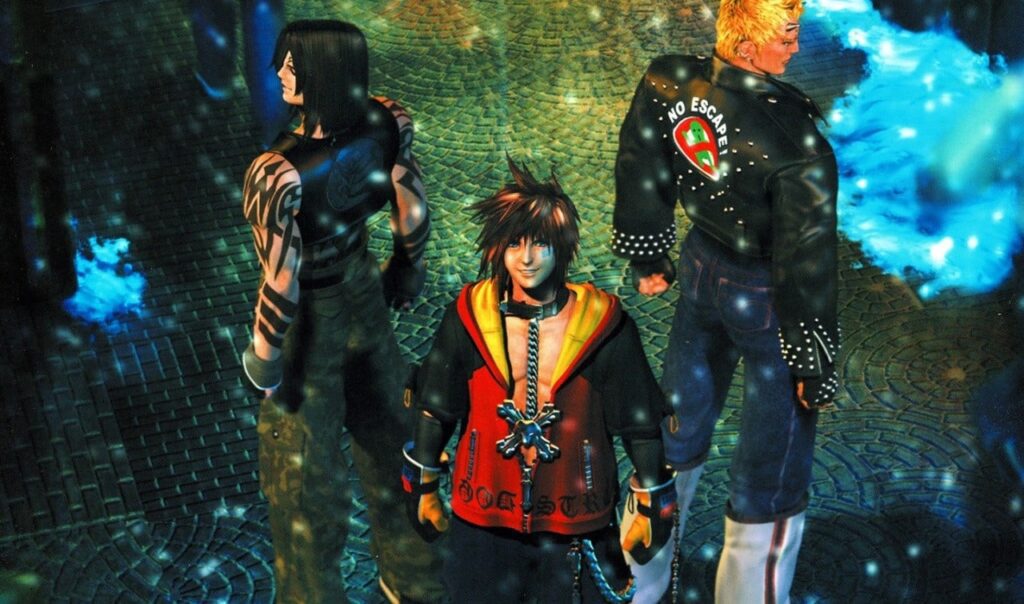
When I first got a PlayStation 2, I remember playing the Devil May Cry series while my cousin watched and kept saying, “Whoa, are you playing a movie?” The Bouncer leaned into that idea even more, marketing itself as “an action movie in videogame form.”
As one of the early PS2 titles, this Square (now Square Enix) project carried a lot of expectations. In many ways, it delivered. The gameplay was solid, and for its time, the visuals were impressive. Combined with Square’s storytelling pedigree, it seemed like a sure hit.
So what went wrong? It was extremely short. Barely two hours long. And in typical Square fashion, a large portion of that time was taken up by cutscenes, further reducing actual gameplay. Combat also suffered from awkward camera angles, and character development was minimal.
Still, the game developed a cult following thanks to its cinematic style, unique visual polish, and surprisingly deep brawler mechanics. It also featured major industry talent, including Shinji Hashimoto, Takashi Tokita, and character designs by Tetsuya Nomura, which makes its failure all the more surprising.
Urban Reign
- Original Platform: PlayStation 2 (2005)
Urban Reign was largely overlooked at launch, earning a mediocre Metacritic score of 60. Critics pointed to its repetitive single-player mode and punishing difficulty spikes, especially boss fights like Golem.
With over 100 missions, many felt the game overstayed its welcome, and expectations were high due to its development by the Tekken team. Over time, however, it gained cult status. Some players now consider it one of the best 3D brawlers ever made.
Its combat system featured advanced mechanics like juggles, grapples, parries, and tag-team attacks that were ahead of their time. While the single-player mode was a grind, its multiplayer became a standout feature, offering chaotic and competitive matches that players still revisit today.
Pokémon Mystery Dungeon: Explorers of Sky
- Original Platform: Nintendo DS (2009)
Yes, we’re going there. We’re calling out Pokémon. Pokémon Mystery Dungeon: Explorers of Sky received a low Metacritic score of 54, with critics criticizing its repetitive gameplay and lack of meaningful improvements over previous entries. At the time, it was seen as a game that most DS owners could skip.
And to be fair, those criticisms were not entirely wrong. However, over time, players have come to praise it for having one of the best narratives in the entire Pokémon franchise. It expanded on its predecessors with additional content, new playable characters, and emotionally impactful “Special Episodes.”
It is a case where strong storytelling was paired with underwhelming gameplay, leaving many to wonder what could have been achieved with better execution.
Final Thoughts
Every game ends up being remembered for something, whether good or bad. What all of these titles share is that they were labeled as failures despite having clear strengths.
Those strengths are still there. And it’s hard not to feel that each of these games deserves another chance. Considering how many weaker titles have found success over the years, maybe these were not truly “bad” games, just ones released at the wrong time.
And with the modern industry leaning heavily into remakes and remasters, perhaps revisiting these overlooked ideas could be a smarter move than simply playing it safe..