
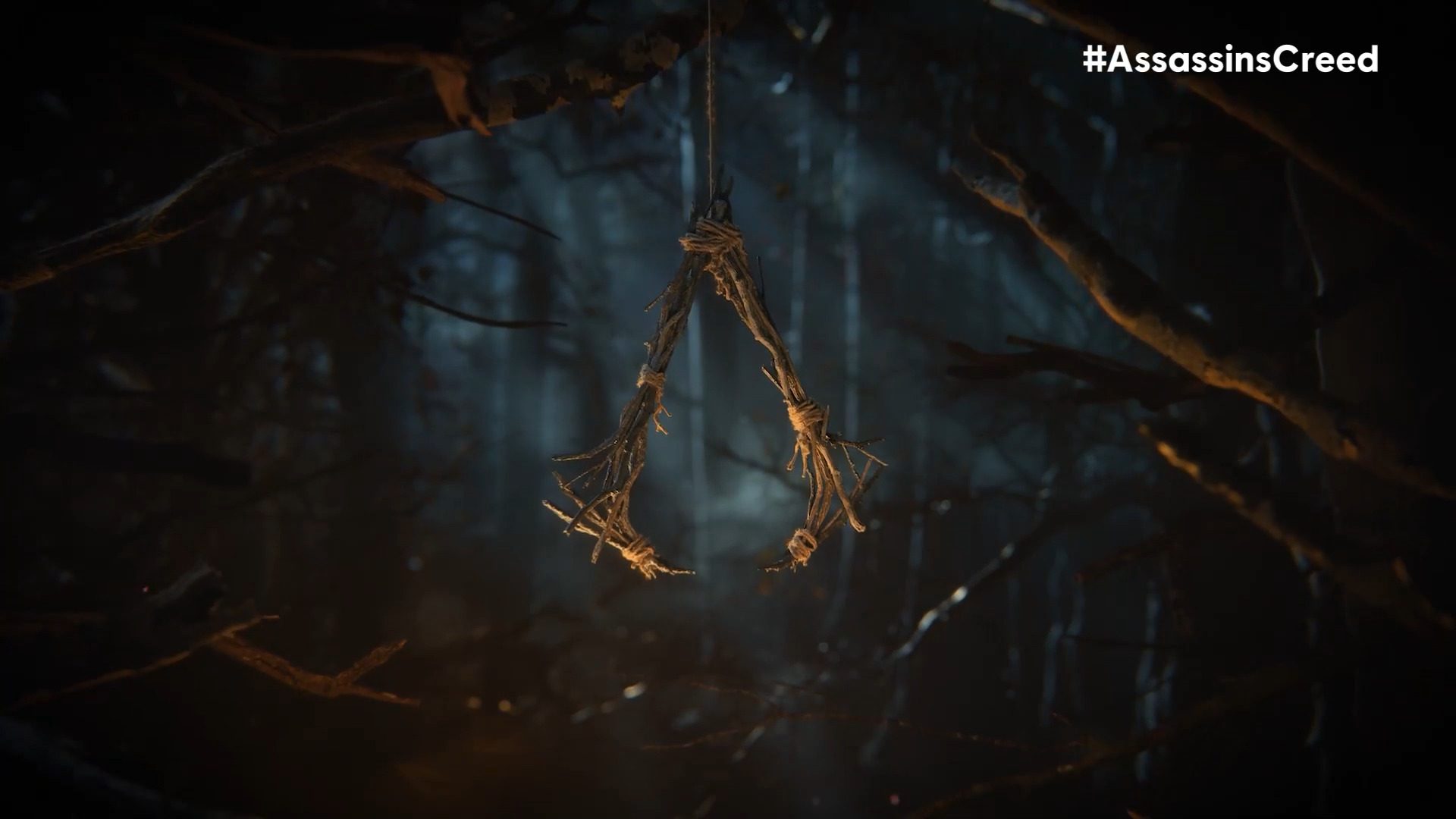
Assassin’s Creed Hexe (or “Codename HEXE) is the next entry on Ubisoft’s long-standing stealth action franchise, and while the original announcement came from a short, nothing-really-revealing teaser way back in 2022, the French publisher did not share any detail about the upcoming trial.
That’s not to say we know nothing of the game — we’re not Jon Snow, folks — but the amount of information available is, well, purposefully scarce, to say the least. Which is par for the course in case of Ubisoft: they do have a thing about “Codename this”: Assassin’s Creed Shadows was firstly named “Codename RED”, for instance.
Still, we managed to do a quick roundup on the internets and compiled a quick guide so you can be up to date with Ubisoft’s latest Assassin’s Creed shenanigans.
Assassin’s Creed Hexe — here are the deets
The confirmed stuff
Lead Development Studio and Creative Personnel
Ubisoft Montreal is officially confirmed as the lead development studio for Codename Hexe. This choice is notable as the studio is the birthplace of the franchise and previously developed massive entries like Assassin’s Creed Valhalla and Black Flag. The project is part of a strategic shift within Ubisoft that grants more autonomy to creative teams through the recently formed Vantage Studios.
The leadership team for Hexe consists of several high-profile industry veterans. Clint Hocking, famous for his work on Splinter Cell: Chaos Theory and Far Cry 2, serves as the Creative Director. Benoit Richer, who directed Batman: Arkham Origins, is the Game Director, while franchise veteran Darby McDevitt acts as the Narrative Director. Christopher Grilli has also joined the team as the Lead Scriptwriter, bringing experience from Origins and Valhalla.
Historical Setting and Thematic Direction
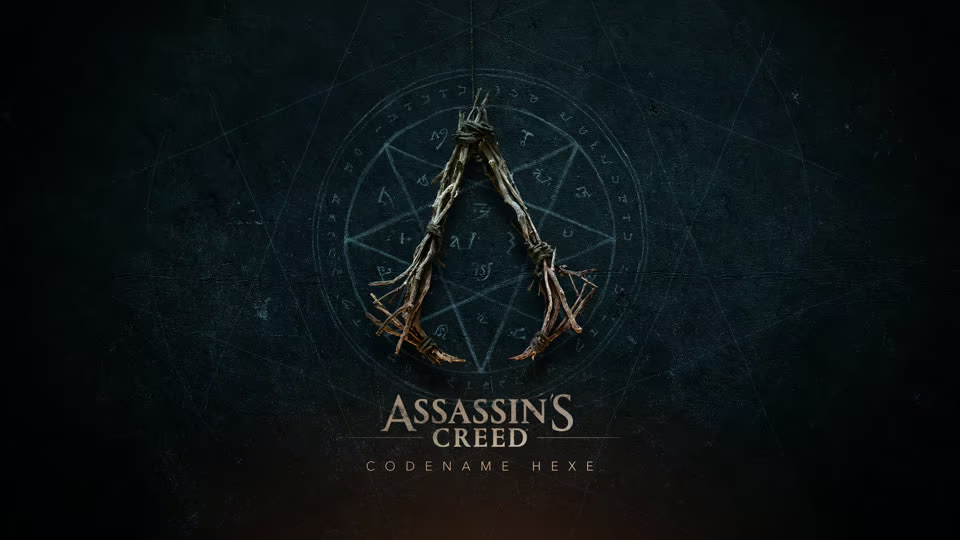
The game is officially set during the 16th-century Holy Roman Empire, specifically focusing on the European witch trials. This era was marked by mass hysteria and religious persecution, which Ubisoft intends to use to create the darkest and most atmospheric entry in the series to date. Promotional materials have already showcased spooky, woodland imagery and occult symbols like an inverted pentacle.
Linguistic analysis of the announcement teaser confirmed the German setting. The talisman shown in the trailer contains Old German text written in the “Alphabet of the Magi,” translating to the Assassin Creed’s maxim: “We work in the dark to serve the light”. Additional script within the pentagram translates loosely to “Mephisto avenge this house,” referencing Mephisto, a demon from German folklore and the Faustian legend.
Gameplay Philosophy and Platform Integration
Ubisoft executives have explicitly confirmed that Codename Hexe will not be an RPG. This marks a major departure from the “Period 2” style defined by Origins, Odyssey, and Valhalla. Instead, the game is described as a “very different type of Assassin’s Creed game” that focuses on innovative gameplay and creative diversity.
Hexe will be integrated into the Animus Hub, a centralized platform formerly known as Assassin’s Creed Infinity. The Hub acts as a unified interface for players to access various historical simulations while housing the franchise’s modern-day meta-story separately. Technically, the game is being built on a new iteration of the Anvil engine pipeline, which promises a significant increase in graphical fidelity and systemic complexity.
The not-so-sure stuff
Protagonist Identity and Narrative Motivation
According to multiple reputable leaks, the game will feature a single female protagonist currently referred to as Elsa. This would potentially make Hexe the first mainline entry in the franchise to feature a solo female lead without a gender-choice option. While “Elsa” was reportedly an initial name, some rumors suggest it may have since been changed during development.
The rumored plot is a revenge story where Elsa seeks retribution after her mother is executed during the witch trials. There is further speculation within the community and from some leakers that Elsa might be a descendant of Claudia Auditore, the sister of Ezio Auditore. However, the sources note that such a connection is currently highly speculative.
Supernatural Abilities and Animal Possession
Industry insiders describe Elsa as having access to supernatural abilities that 16th-century society would perceive as witchcraft. Specifically, leaked footage reportedly shows a mechanic where the player can possess and control animals to distract enemies. In one instance, Elsa is said to possess a cat to knock over a bottle, creating a diversion for German soldiers.
These powers are believed to be grounded in the franchise’s sci-fi lore, possibly involving a Piece of Eden or Elsa’s specific Isu heritage. Some rumors characterize her as a “hereditary clairvoyant” who utilizes these “witchy” powers while remaining a fully-fledged member of the Assassin Brotherhood. This supernatural lean is expected to support a horror-inspired gameplay loop.
Gameplay Systems and Project Scope
Reports suggest that Hexe will incorporate a modified version of the “Fear System” originally seen in the Jack the Ripper DLC for Assassin’s Creed Syndicate. This system would allow the player to instill terror in NPCs and soldiers, potentially using potions or supernatural displays to manipulate the environment. The gameplay is rumored to emphasize stealth and evasion over direct combat.
The project is believed to be a more linear experience with some open-world exploration, similar to earlier games in the series. Leaks indicate that the game may be smaller in scale than recent RPGs, with a main story length of approximately 15 to 20 hours. While there is no official release date, roadmaps and rumors point to a release window of 2026 or 2027.
The flat out debunked stuff
The Aztec Setting Misconception
Prior to the official reveal of Hexe, significant rumors circulated online suggesting that the next major Assassin’s Creed game would be set in the Aztec Empire. These reports gained traction in mid-2022 on social media and Reddit as fans speculated on the future direction of the Infinity platform.
This rumor was explicitly debunked by industry reporters such as Jason Schreier of Bloomberg News. Schreier stated that he had heard about the two main projects for the Infinity platform—Red and Neo/Hexe—and confirmed that neither were Aztec-themed. This debunking was later validated when Ubisoft officially announced the Japan and Holy Roman Empire settings.
The Salem Witch Trials Speculation
Upon the announcement of a “witch-themed” game, many fans initially assumed the setting would be the Salem witch trials of late 17th-century America. Salem is often the most recognizable historical event of this nature in Western popular media, leading to widespread speculation across social media platforms.
This theory was debunked by linguistic evidence within Ubisoft’s own promotional materials and subsequent official confirmations. The use of Old German script in the teaser and the German codename “Hexe” (meaning witch) definitively established the setting in Central Europe. Analysts also pointed out that the European trials were vastly larger in scale, offering a more significant historical backdrop than Salem.
The 100-Hour RPG Assumption
When Ubisoft first discussed the Infinity platform, many players assumed that all future flagship titles would follow the massive 100+ hour Action-RPG model used for Odyssey and Valhalla. There was a general expectation among the community that Ubisoft would continue to expand the scope of its open worlds to maximize player engagement time.
This assumption was debunked by Vice President Executive Producer Marc-Alexis Côté in official interviews. He clarified that the franchise is entering a “Third Period” where gameplay styles and scales will be more diverse. He explicitly stated that Hexe is not an RPG and that the company intends to keep “surprising people” with different creative tracks rather than repeating the same sprawling formula.