
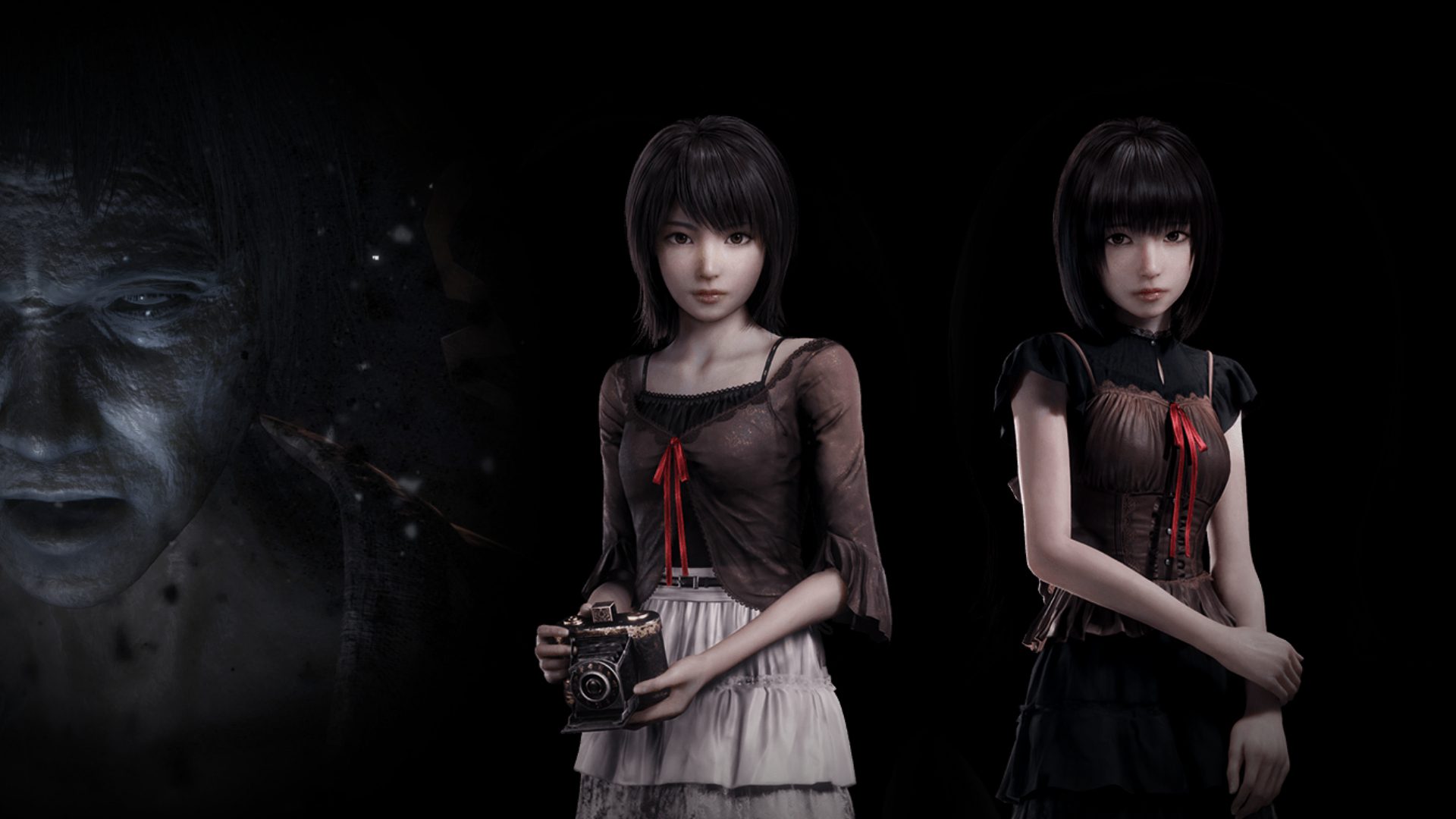
Koei Tecmo just released a bunch of details on Fatal Frame II: Crimson Butterfly Remake — and instead of merely doing a news piece, we at PRG decided to bring a full on guide with all the updated info we could find on the project.
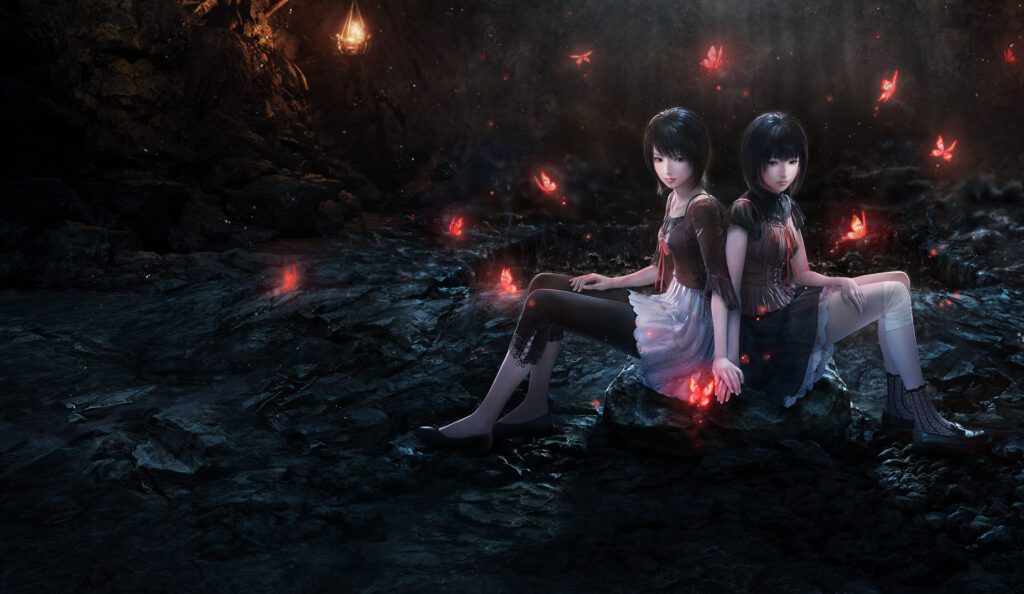
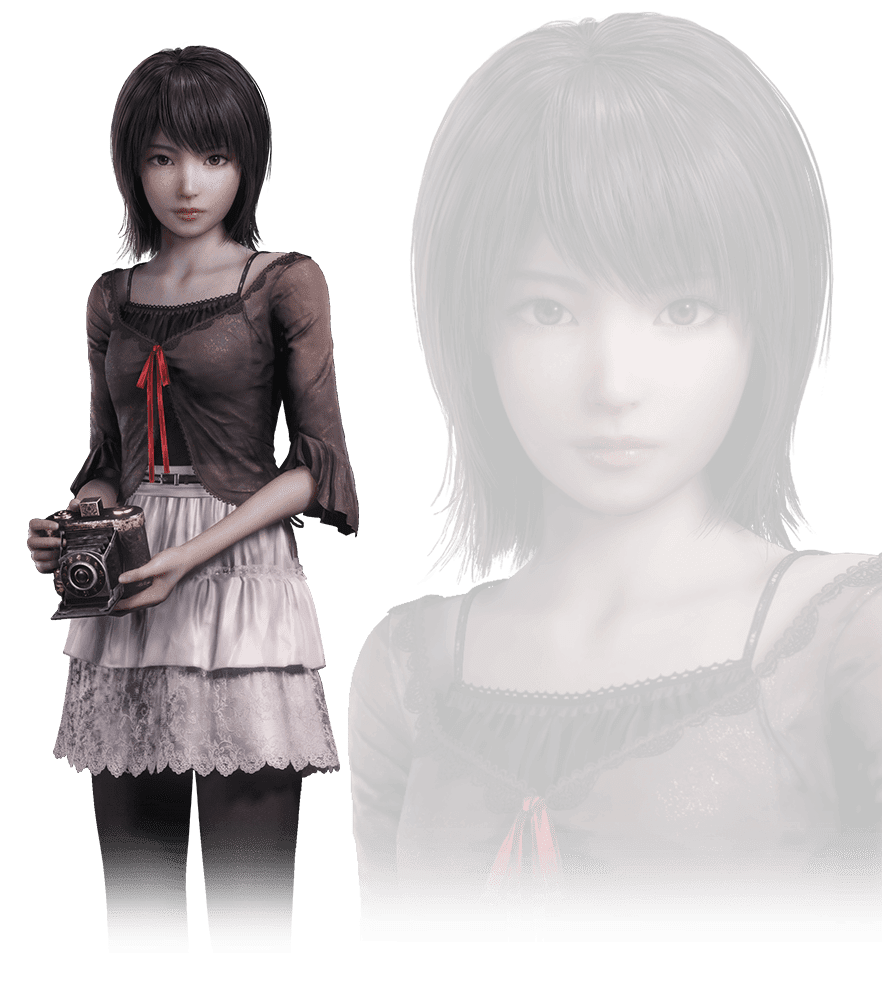
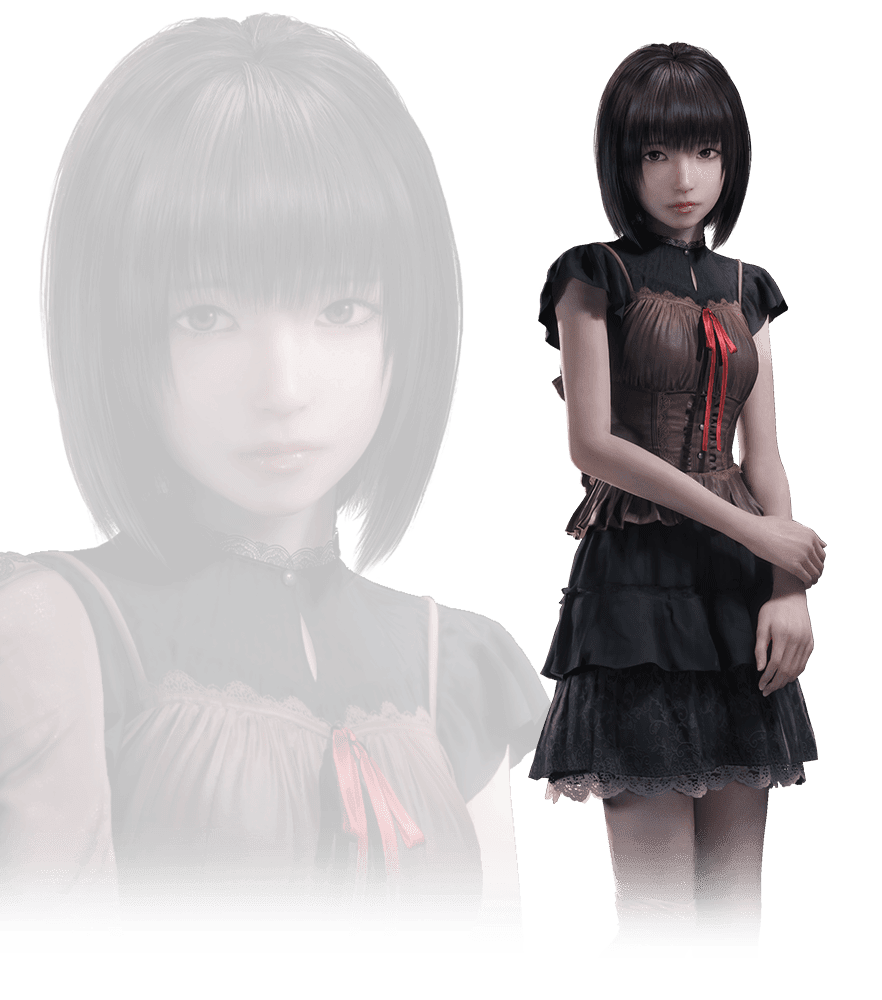
Now, Fatal Frame II is a horror classic in the videogame industry. Originally released in 2003 for the PlayStation 2, the title tells the story of twin sisters Mio and Mayu Amakura. Due to a major injury indirectly caused by younger sister Mio, Mayu has difficulties moving around, which absolutely did not stop her from being led away by a crimson butterfly. Mio gave chase and, because Mayu has the foresight and attention span of a labrador, they both end up in Minakami Village, which is legendary for trapping its visitors and being haunted by ghosts. Oh, and the entire region is soon to be flooded due to a new dam project.
Quite the tourist attraction, one might think.
The Fatal Frame II: Crimson Butterfly Remake project has kept all of this intact, while adding some new content that promises to give an old game a new, refreshing breath for modern audiences.
So read on to find out all about it.
Fatal Frame II: Crimson Butterfly Remake: here’s ALL the deets
Why skip the first game & what’s new for the remake
One of the first questions everybody and their mothers usually have is why not remaking the first game. After all, Crimson Butterfly, while noticeably upgraded from its predecessor, used pretty much the same mechanics as the original Fatal Frame.
Well, director Makoto Shibata gave a candid answer: volume of content. By modern standards, the first game is quite short and would have required inventing massive amounts of new content to meet 2026 expectations. Crimson Butterfly provided a much richer narrative foundation to build upon for a large-scale production.
And by “new content”, Shibata means:
- From tank controls to TPS: This is probably the most noticeable change, as the original game had a fixed camera and the so-called “tank” controls. These are all gone in the remake, in favor of a third-person shooter feel — think of it like old Resident Evil titles versus the new ones and you’ll get the idea. This allows players to look around freely and feel more immersed in the environment.
- Motion matching: A new animation system ensures Mio moves realistically, whether she’s naturally leaning against a wall or stumbling in a state of panic. This also serves a practical purpose, as the original game had some clipping issues (like a character’s shoulders sort of penetrating a wall, for instance). By adding more lifelike small animations, the game improves immersion.
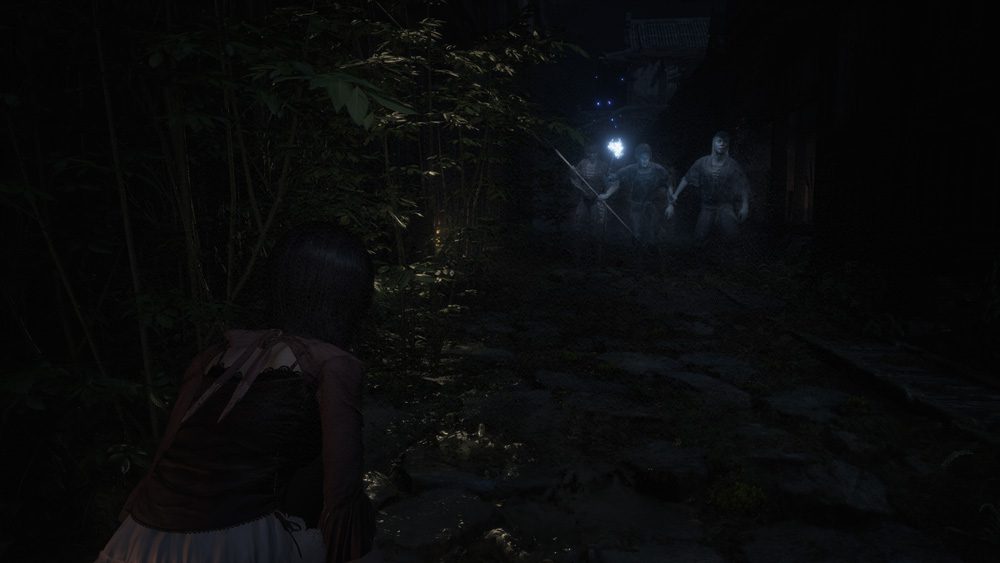
- Immersive atmosphere: Speaking of immersion, the game leverages 7.1.4-channel 3D audio, allowing you to pinpoint ghosts by the sound of their whispers or the rustle of nearby trees. Visually, the team focused on lighting, fog, and shadow contrast to create a “humid” and unsettling atmosphere.
Oh, and while we’re at it, there is no word on potential remakes, remasters or revisits to further games of the franchise — we’d love to see Maiden of the Black Water coming back to life some time, though…
The evolution of Camera Obscura
Fatal Frame II had a nifty spirit-fighting tool called “Camera Obscura”, a photographic device that allowed players to counter ghost attacks. In essence, it’s a camera with the ability to stun and exorcize demons with its flash and shutter, and it’s a staple on the entire franchise.
The remake sees the Camera Obscura completely revamped, now feeling more like a DSLR gadget, with contemporary features to boot:
- Focus points: Instead of just centering a ghost, you now see specific “Focus Points”. Aligning multiple points before firing deals massive damage.
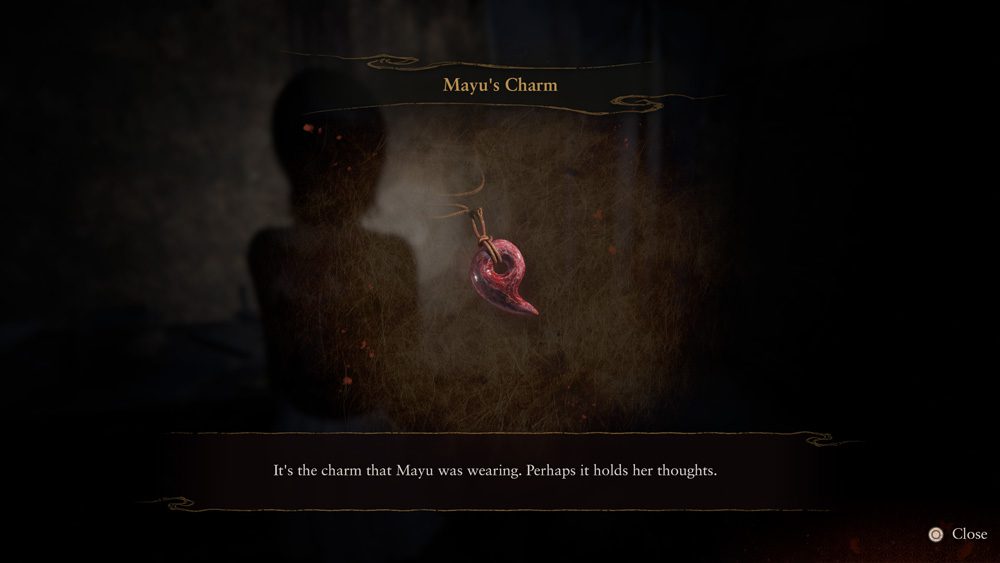
- Tactical filters: New filters change your offensive properties. The Paraceptual Filter can blind targets or reveal “residual memories” of the past during exploration. The Radiant (or Exposure) Filter allows for faster shots or increased damage at the cost of Mio’s willpower. Kinda like Instagram Stories if they were actually useful.
- Advanced shooting: If you deal enough damage, you enter a Shutter Chance state for a high-damage follow-up. Timing a shot perfectly triggers Fatal Frame, and doing this during a Shutter Chance activates Fatal Time, allowing for a rapid-fire succession of shots.
New gameplay mechanics
Improving Camera Obscura is not the only change Koei Tecmo made in Fatal Frame II’s gameplay. There are several other, more contextual changes that brings more flow to the entire experience, such as:
- Hold Mayu’s hand: A feature originally cut from the PS2 version due to technical limits is now a core mechanic. Mio can hold her sister’s hand to physically restore health and stamina, reinforcing their bond through gameplay.
- Willpower system: Running or being attacked drains Mio’s willpower. If it hits zero, she collapses and becomes extremely vulnerable to spirits. This is probably a reference to the “Sanity Meters” we’ve seen time and time again — the first time I personally have experienced that was the Gamecube’s Eternal Darkness.
- “Eclosion” (Ue-ka): Spirits are now more dangerous. They can enter a state of “blooming” where they sprout wings, regenerate health, and become significantly more aggressive.
- Twin Dolls & RPG elements: You can find Broken Spirit Stones to unlock side stories or Prayer Beads to upgrade your camera. There are also Twin Dolls hidden throughout the village; photographing them unlocks items in a Point Exchange.


Expanding the village: new areas & content
Minakami Village is larger than you remember. Now, Fatal Frame II brings two completely new areas that were cut from the original release.
- Umbral Mound: An ominous burial site hidden within dense bamboo groves.
- Eikado Temple: A candlelit hall featuring twin statues tied by sacred cords.
Alongside new areas, the game now has a new ending — one that complements the original game’s final moments (which were three, all depending on choices made during your adventure).
- New ending: Along with the original conclusions, there is a brand-new ending featuring the song “Utsushie” by Tsuki Amano.
- Photo Mode: It would be hella weird for a game where the main combat tool is a camera, to not have a dedicated mode (separate from the Camera Obscura) that lets you edit shots with frames and stickers to create “terrifying souvenirs”.
Demo details and launch date
Yes, Fatal Frame II: Crimson Butterfly Remake will have a demo available. It’s supposed to come out on March 5, 2026 — just one week before the game’s official launch on March 12.
It is also coming for PlayStation 5, Xbox Series X|S, Nintendo Switch 2, and PC (Steam) — the latter is exclusively digital.
The save data from the demo will carry over to the full game.
And as a final gift, Koei Tecmo arranged a small partnership with Konami for a Silent Hill f crossover, featuring free costume DLC for both games at a post-launch date.
Finally, there is a bit of an “early bird” type of offer for gamers who buy the remake by March 25/26, 2026, in the form of an Early Purchase Bonus that includes red and black Kimonos and Peony hair ornaments for the sisters. Pre-ordering the digital version specifically adds Cat Ears and the original 2003 costumes.