
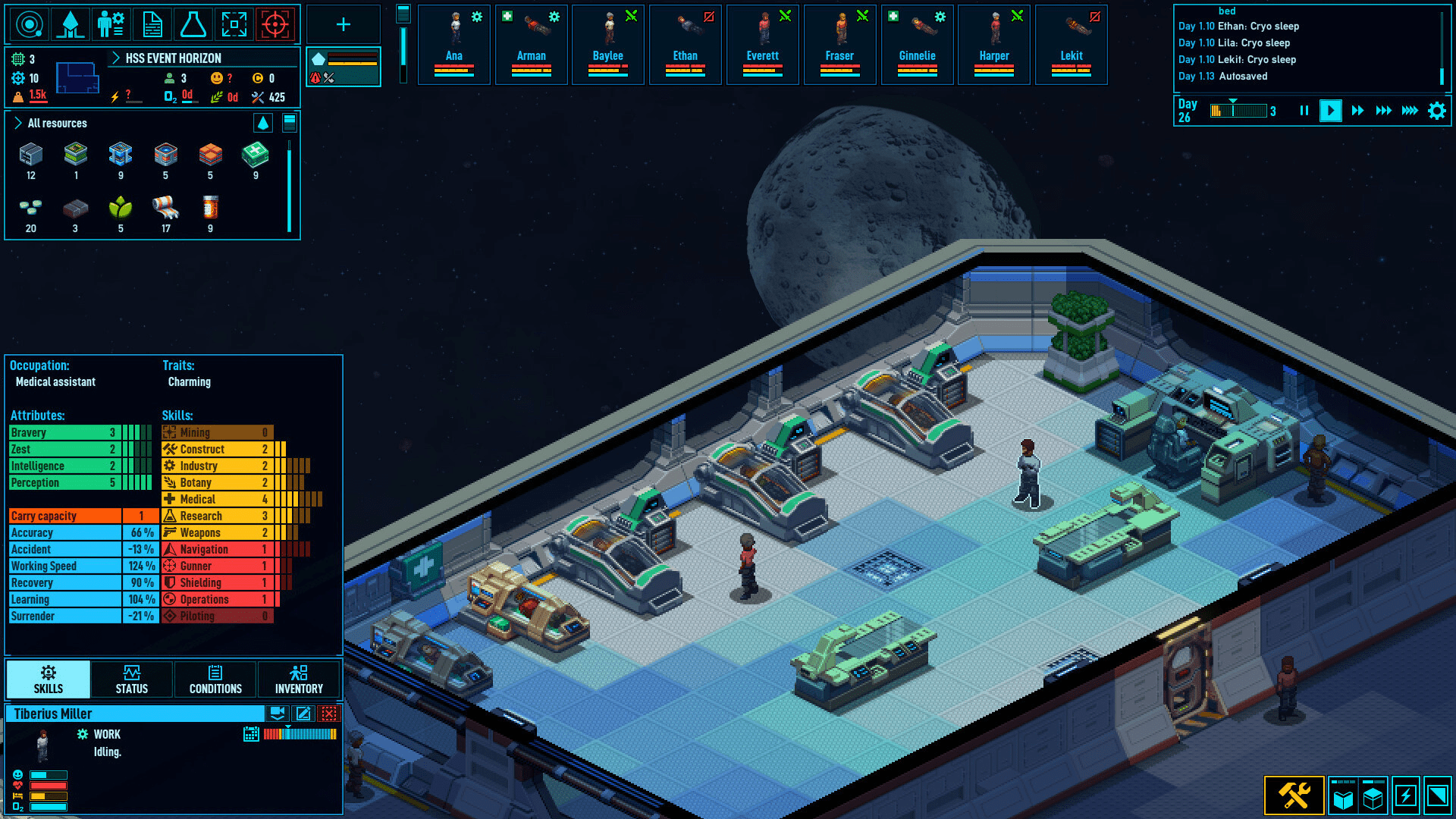
Space Haven is a colony ship simulation where you design and manage a living spacecraft while keeping a small crew alive in deep space. You handle survival systems like oxygen, power, food, temperature, and defense, but the real challenge sits in how your ship is laid out. Every room placement affects how fast your crew moves and how safely they survive emergencies.
Good ships are not big ships. They are efficient ones. The layout decides whether your crew works smoothly or spends half their time walking across empty corridors.
Early Ship Building: Start Small and Stay Controlled
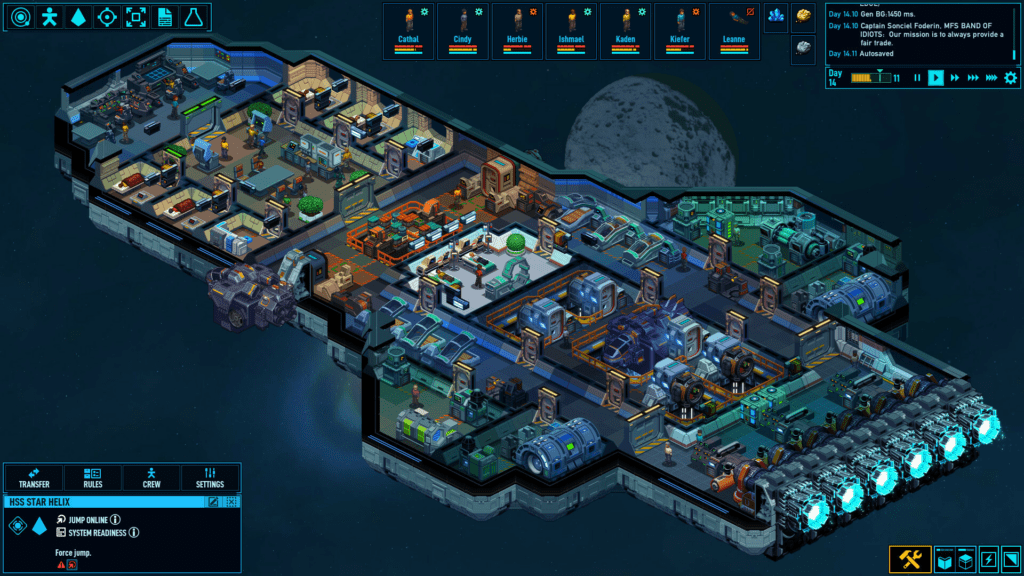
Most problems in Space Haven start with expansion too early. A large hull looks impressive, but it drains resources and spreads your systems thin before they are ready. A smaller ship gives you control and makes mistakes easier to fix.
Before placing anything permanent, the blueprint tool helps you map out your structure without wasting materials. It is one of the simplest ways to avoid rebuilding large sections later. There are a few early priorities that shape everything else:
- Keep the hull compact until systems stabilize
- Connect generators, solar panels, and power nodes into a complete grid
- Plan oxygen, gas scrubbing, and temperature control from the start
- Separate noisy industrial rooms from sleeping quarters
- Use walls and doors to isolate work zones from rest areas
Power and life support are usually what decide whether an early ship feels stable or constantly unstable. If either one is poorly planned, everything else becomes harder to manage.
Layout Logic: Building Around Movement and Flow
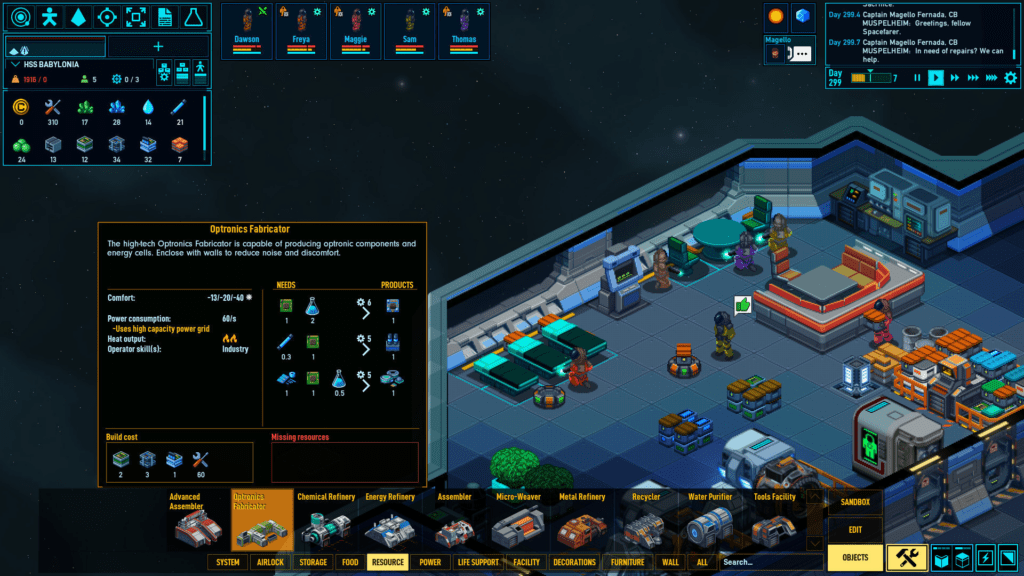
Once your ship is stable, layout becomes about efficiency. The goal is simple: reduce unnecessary walking and keep related systems close together so your crew spends more time working and less time moving.
Storage is one of the most important parts of this. When storage is placed near airlocks and production areas, hauling time drops immediately. That alone keeps your entire economy running more smoothly without extra effort.
Food systems also benefit from proximity. Kitchens and grow beds work best when they are placed together since they support the same resource loop. Plants help regulate air while kitchens process supplies, creating a natural flow between production and survival systems.
Industrial zones should not mix with living areas. Many players isolate them completely, sometimes venting them, so gas and heat never spread into the rest of the ship. It is not comfortable for workers, but it protects everything else from instability.
Airlocks and Ship Defense
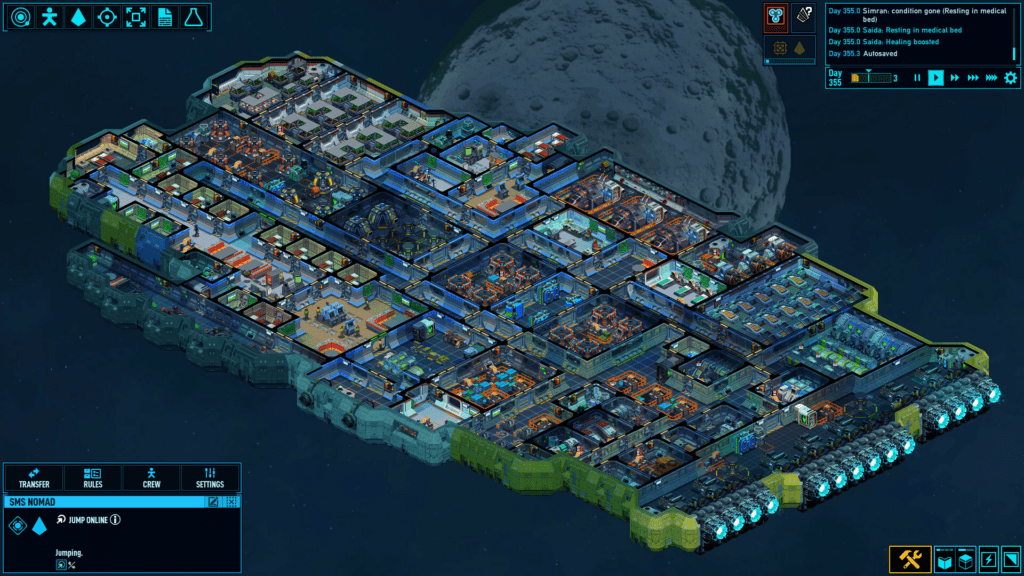
Airlocks are where most boarding problems begin, so their design matters more than it first appears. A poorly placed entrance can let enemies spread into critical areas too quickly.
Instead of opening directly into your ship, the airlock should lead into a controlled path. A narrow corridor works well because it slows movement and limits how many directions enemies can take. Adding cover objects along the way gives your crew and turrets better control during fights.
Turret placement should focus on coverage rather than scattering. Central positioning or overlapping firing lines makes it harder for boarders to find safe angles.
Crew Routines and Living Efficiency
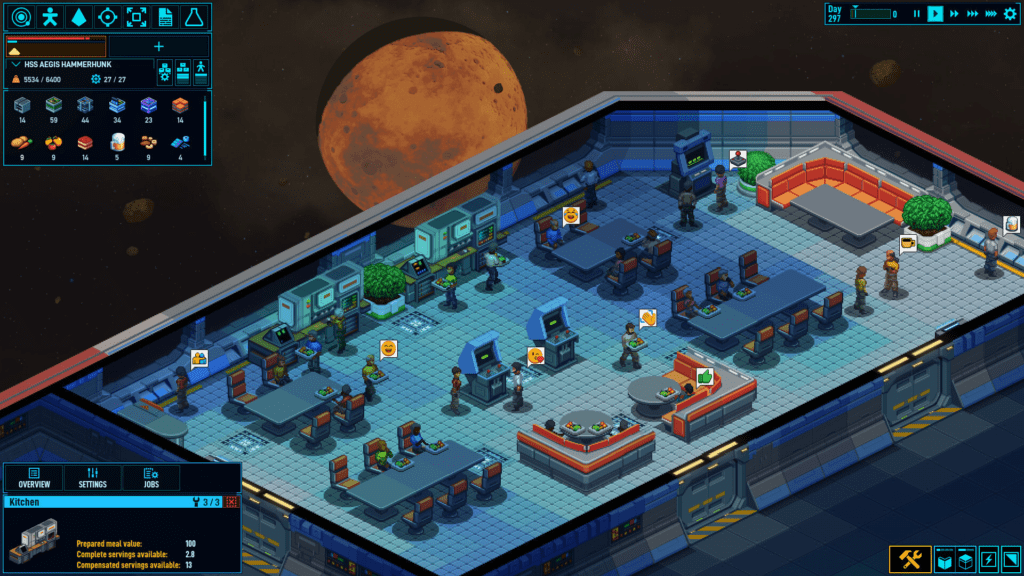
Crew performance depends heavily on how well the ship supports daily routines. If movement is messy or rest is constantly interrupted, productivity drops across every system. A strong setup usually looks like this:
- Small crew groups with shared sleep and work schedules
- Bedrooms placed away from machinery and industry noise
- Kitchens and grow beds located close together
- Clear separation between living space and work zones
This is also where air management becomes important. Plants help stabilize oxygen levels, but smaller crews may need adjustments in CO₂ balance to keep production steady. When living areas feel stable and predictable, everything else becomes easier to manage.
Final Thoughts
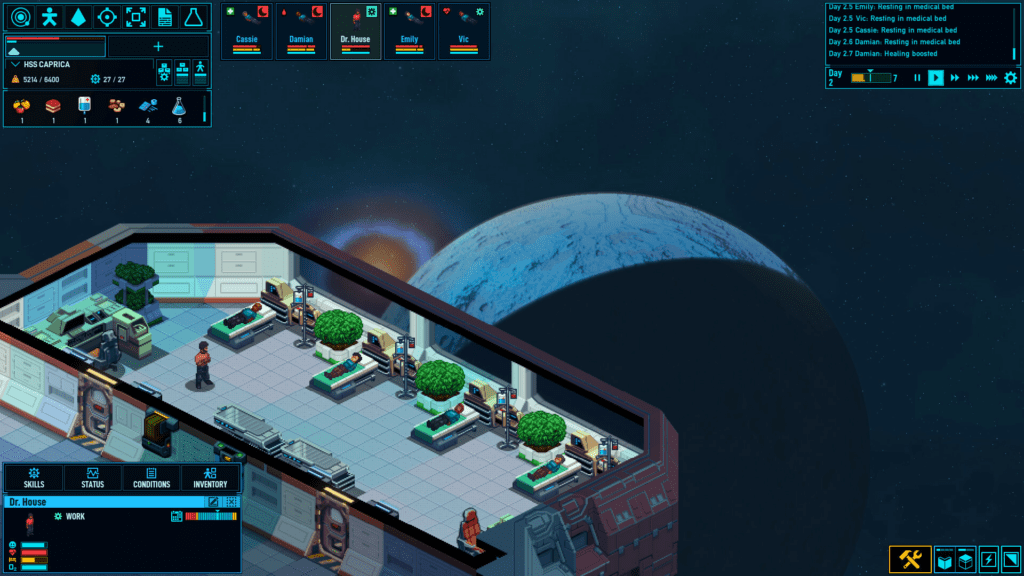
A good ship in Space Haven is built around flow. When systems are grouped correctly and movement paths stay short, the entire ship starts to function as one connected structure instead of separate rooms.
Once that happens, you stop fighting your layout and start relying on it.