
Nostalgia is a big thing for gamers: old people like me usually have fond memories of video games from yore, remembering in high definition most details of things we used to play and how we felt. Meanwhile, no video game studio or publisher have ever survived by sticking to the old ways without acknowledging technological evolution.
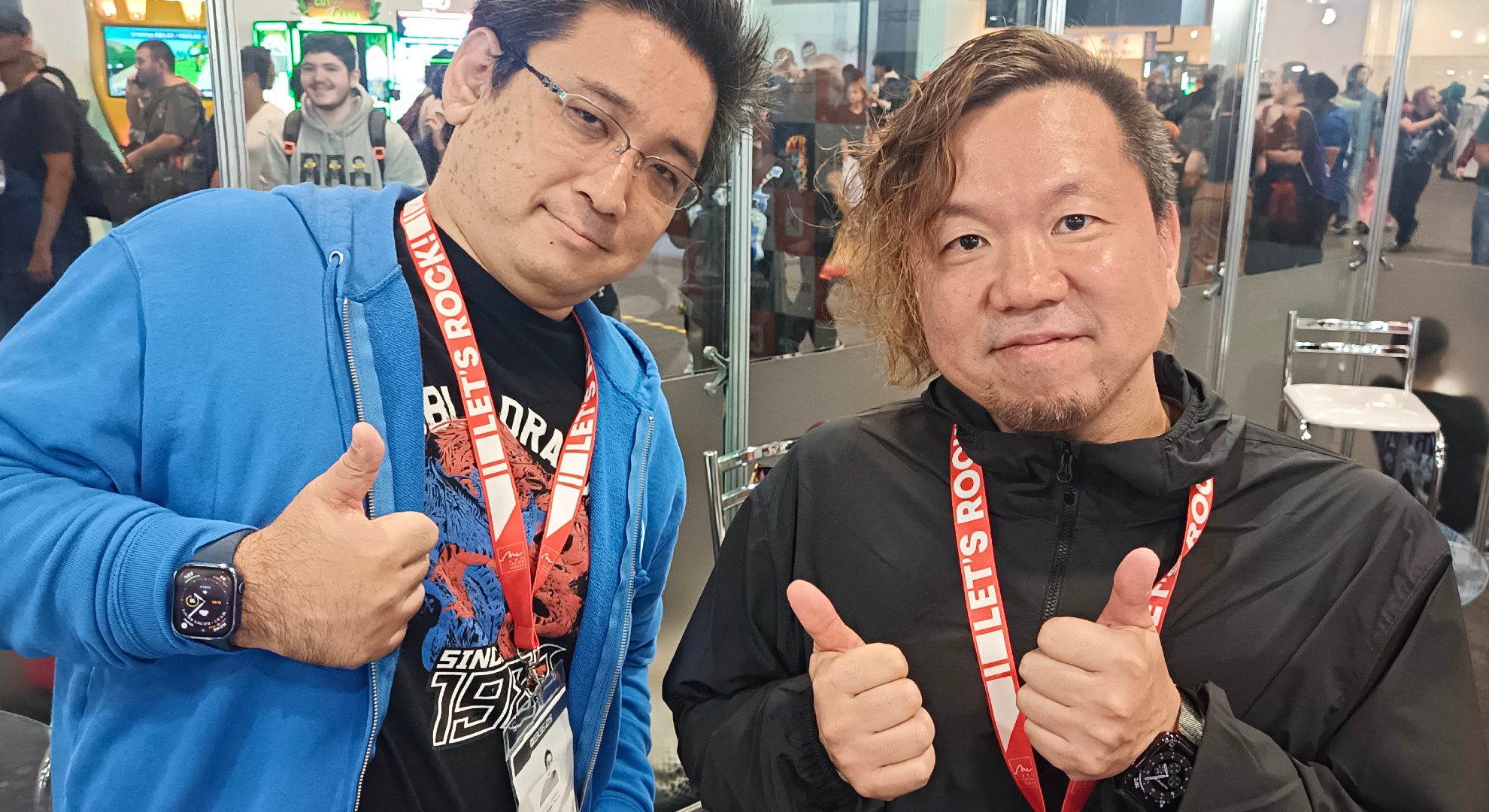
Such is the case with Arc System Works, which we managed to catch up during our coverage at Brasil Game Show (BGS) 2025. As first time visitors, Hideyuki Ambe, Executive Officer, CTO and Product Development Director; and Hiroshi Nagaki, Development Director, were kind enough to have a quick sit-down with us and chat about two of the studio’s recent projects: Double Dragon Revive and Guilty Gear Strive.
One thing that was evident during our playthrough with both games is how Arc System Works is still very attached to the nostalgic aspect of both franchises: much like us, they recognized the value of bringing decades old brands into new audiences, but they were also cautious enough to not lose track of what made these great games, well, great.

“This was a tough fight to be in”, Nagaki-san told us. “To keep using a classical element is to face the possibility of being seen as outdated, especially by the younger audience. This matter of giving value to what you already have — the classics and the older fans — while trying, little by little, to modernize and try new features, was a proving point in our efforts of mixing these two sides.”
Double Dragon Revive is a perfect example of this: according to the game’s development director, given the company’s experience with both beat’em up and fighting games, it was impossible for one genre to not influence the other. This, as it turned out, Nagaki sees this as an advantage in the making of the soon-to-be-launched title:
“We incorporated every possible knowledge we have in terms of fighting games [for Double Dragon Revive]. Before I became the game’s director, I used to work on Guilty Gear specifically in design and balance. One specific thing we did was making all moves more meaningful, in the sense of flow and looks. There’s purpose in each punch in the game: punches are not thrown at random, and there is efficiency in context: certain enemies will suffer more damage from a jab because they’re inherently weaker against them. Same goes for those who withstand straight punches better but won’t resist as much against hooks and uppercuts. So you’ll need to use everything in a more strategic way.”
Hiroshi Nagaki, Double Dragon Revive’s Development Director
That stands out right before any stage starts: unlike the original title, Dragon Ball Revive has a bunch of combo recommendations that adds more flair to its combat — instead of mashing a single button away, it is possible to chain together several moves, both command insertions from the joystick’s face buttons as well as contextual and environmental prompts that might result in very different outcomes. Essentially, almost no punch will be the same even if the button pressed is.

This modernizing aspect also comes into play on Guilty Gear Strive: despite not being a cult classic like the original Double Dragon, the brand’s name does have a long history of being an old school fighter that does not shy away from experimentation. This time, most of Strive’s gameplay feels the same as its most recent predecessors, so Arc System Works decided to bet on expanding other elements.
“We did an anime [Guilty Gear Strive: Dual Rulers, now playing on Crunchyroll] that was a long time coming”, Anbe-san explained. “Despite coming out just recently, this was an idea we had a while back, but have only been able to put in motion now due to the business schedule getting so busy.
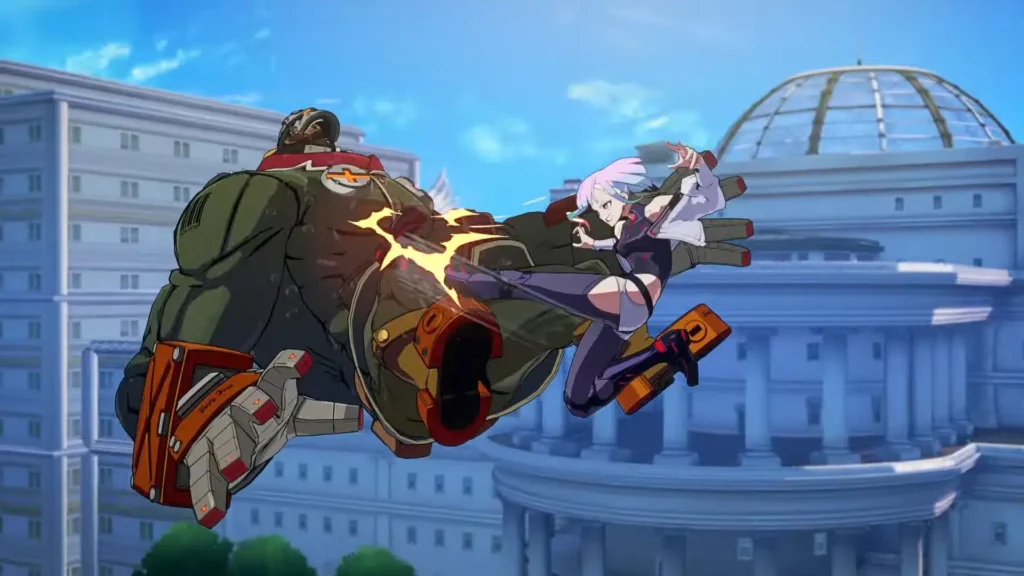
Anbe also explained that this brings the idea of making the franchise a point of collaboration with other media: the game unveiled Cyberpunk: Edgerunners’ Lucy as a DLC fighter, as well as the recent 1.50 update releasing new skins based on the Netflix/CD Projekt Red anime for its original characters. This “transmedia” aspect is something that Arc System Works is currently experimenting with and, to quote Anbe’s own words, “to keep doing if the chance rises.”
Furthermore, the fighting franchise seems ready to navigate to deeper waters: Anbe commented on how the Guilty Gear brand is getting more and more evident in markets it normally wouldn’t, thanks to Arc System Works’ efforts on expanding its competitive scene with eSports tournaments in several places.
“In Europe, our structure was founded about two years ago, so it’s still a young project. But it is our intention to really amplify the competitive side of our industry and its events. Thanks to all of our community of fans, we do have a pretty big scene for ourselves. One problem we need to solve is the lack of people within Arc System Works, in US and Europe. But there are expansion efforts underway to remedy that.”
Hideyuki Ambe, Executive Officer, CTO and Product Development Director at Arc System Works
Is Arc System Works using AI?
Nowadays, both executives are focused on seeing what new resources they have available to keep improving the studio’s releases — which inevitably brought into question the use of artificial intelligence. For both of them, generative AI apps like ChatGPT are a hot topic as many people in Japan are against the use of them to “steal artists work” — something they themselves seemingly agree with.
However, they also recognize the value of adopting new tech on products of digital nature — a category that inherently contemplates video games. And as Arc System Works is on the verge of completing 40 years of history in 2028 (30 of those working on fighting games and beat’em ups), both executives can’t help but realize the benefits of AI, as long as they’re implemented in a controlled manner:

“There’s a lot of talk about using AI as a substitute for voice actors, for example, and this is something most people in Japan oppose completely”, Anbe explains. “On the other hand, to keep the world from adopting AI tech is nearly impossible. What we are doing now is entering a phase of trying to understand what ‘AI’ actually is and how to explore it. In our hiring practices, for instance, there’s a test where we ask candidates to create something from scratch, using AI. Obviously, these will never become a product, but we want to see how this can impact initiative and personal drive.”
This is, obviously, different from GenAI: Double Dragon Revive seems to have a prediction-based system that allows enemies to adapt to the user’s strategy — try to line up your enemies for button-mash them into oblivion will eventually see them circle around you and try to take you on from several directions, for instance.
However, the game’s art and soundworks, gameplay ideas and writing are all original, human-made.
“As we near our 40-year mark, our idea for the future is to be a company that’s ever-evolving, working on specific game genres and learning to combine every surging technology out there. But always in a way that maintains our traditional values and style.”
Hiroyuki Ambe