

Late April saw the release of Diablo IV’s latest expansion, “Lord of Hatred,” which marked the return of the Paladin class, a grounded, highly durable melee fighter that was absent from the base game.
However, unlike previous iterations of the Paladin, this new version comes with an exclusive feature called the “Oath system,” which improves the class by giving it more flexibility and branching skill paths to follow.
Given that the usually rugged and heavy-handed class now has many more options to expand its arsenal, we came up with an explainer that breaks down the new features and how to make the most of the Paladin in Diablo IV.
Mastering the Oath System
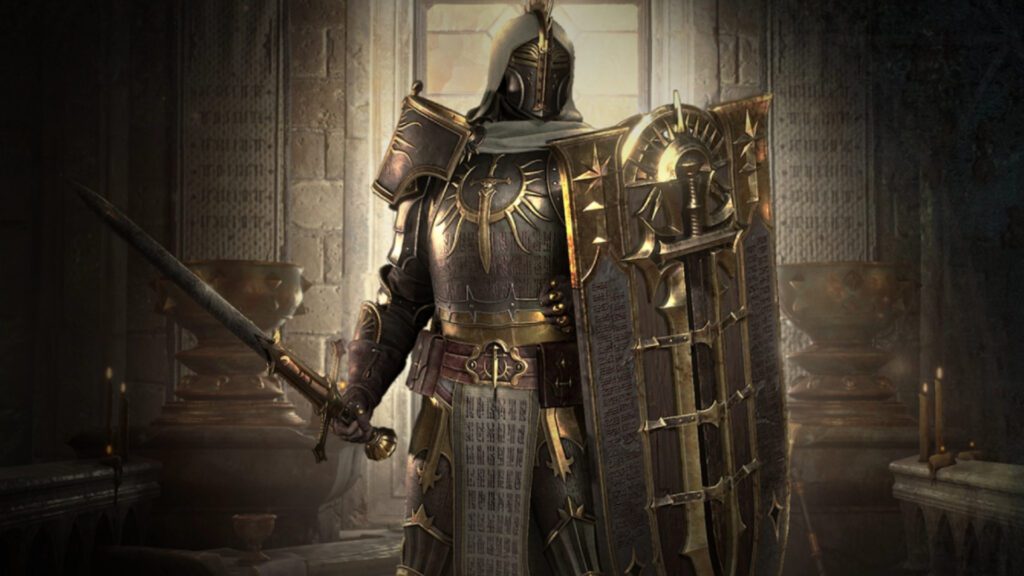
Starting with the new mechanics, the core of any Paladin build in Diablo IV is the Oath system, a unique mechanic unlocked during the early progression of the character, accessible at level 15 and fully realized by level 25, that fundamentally alters your gameplay style.
Rather than being a simple passive bonus, these Oaths define which abilities are empowered and what unique status effects you can exploit in battle. There are four primary paths a warrior of the Light can follow:
The Disciple: This path is designed for those who prefer a “holy mage” playstyle or high-mobility transformation builds. By using specific skills, you can ascend into the Arbiter form, a winged angelic state that grants massive armor bonuses, increased movement speed, and access to powerful wing-based strikes.
The Zealot: Focused on unrelenting aggression and speed, this Oath utilizes Fervor stacks. As you attack, you build momentum that allows your critical strikes to echo, hitting targets multiple times in rapid succession.
The Judicator: Ideal for crowd control and area-of-effect damage, this path revolves around marking enemies with Judgment. Once marked, your core skills can detonate these symbols, causing massive holy explosions that chain through nearby packs of demons.
The Juggernaut: This is the ultimate defensive specialization, turning the Paladin into a wall of metal that converts incoming damage into retribution. It relies on Resolve stacks to reduce incoming damage and empower heavy shield-based attacks, making it perfect for those who want to anchor a group.
Core Stats and Attributes

The Paladin’s effectiveness scales directly with four primary attributes, with Strength serving as the most vital stat for any build. Understanding these priorities is essential for gear optimization:
- Strength: The primary attribute. Every point increases your raw skill damage and total armor, reinforcing the class’s identity as a durable bruiser.
- Willpower: This stat governs your resource management. It increases Faith generation and enhances the effectiveness of all incoming healing.
- Intelligence: Vital for endgame scaling, Intelligence boosts your critical strike chance and provides resistance to all elemental damage types.
- Dexterity: Though secondary, Dexterity increases your dodge chance, providing an extra layer of RNG-based survivability.
The class utilizes Faith as its primary resource, in the same way mages in other games use mana. While it regenerates slowly over time, players must actively generate it by using Basic skills and specific utility abilities like Rally to fuel their high-cost Core spenders.
Skills and Combat Rhythm

Combat for a Paladin is categorized into six skill clusters, each serving a specific tactical purpose. Success depends on weaving these together to maintain a constant rhythm of Faith generation and consumption.
- Basic Skills: These are your primary Faith generators. They range from melee arcs like Brandish to ranged hammer tosses like Holy Bolt.
- Core Skills: Your primary damage dealers and resource spenders. Iconic abilities like Blessed Hammer, Zeal, and Shield Bash are located here.
- Aura Skills: These provide sustained passive buffs to you and your party. Activating an aura often triggers a powerful short-term active effect, such as making you Unstoppable.
- Valor Skills: This cluster focuses on mobility and utility, including charges, taunts, and the high-mobility Falling Star slam.
- Justice Skills: Tactical abilities used for ground control and area damage, such as Consecration or the orbital Spear of the Heavens.
- Ultimate Skills: High-cooldown, game-changing abilities like the angelic Arbiter of Justice transformation or the invincible Fortress zone.
Strengths and Weaknesses

While the Paladin is an incredibly robust class, it possesses distinct trade-offs that players must manage.
Strengths
- Exceptional Survivability: High armor scaling and the ability to use shields make Paladins the most durable class in Sanctuary.
- Unrivaled Group Utility: Auras and healing zones make the Paladin a strong inclusion for high-tier group play.
- Strategic Flexibility: The Oath system allows one character to pivot between a ranged caster and a melee tank.
Weaknesses
- Heavy Gear Dependency: The class’s damage and survivability are tied closely to the quality of its weapons and shields.
- Limited Range: Even ranged builds often require the Paladin to be in the thick of combat to benefit from auras and passive heals.
- Resource Downtime: Poor management of Faith can leave a player vulnerable and unable to cast their most impactful skills.
Mastery Tips and Playstyle for the Paladin Class

To make the best use of the Paladin, the first thing to understand is that raw strength is not enough. While it is the primary attribute for increasing damage output, optimizing synergy between your gear and your chosen specialization, in this case the Sacred Oath path, is what sets skilled players apart.
While you are free to build your Paladin in many different ways, some fundamentals apply to the class:
- Shields are not mandatory, but you lose a lot without them: While two-handed weapons offer higher damage per hit, the Paladin loses access to critical mechanics, such as Crusader’s March or specific retribution triggers, without a shield.
- Complete the Class Quest: At level 15, you must prioritize the Paladin class quest. The class is mechanically incomplete until the Oath system is unlocked.
- Manage Your Auras: Most endgame builds require you to run at least two auras. Fanaticism is generally preferred for its attack speed and critical hit bonuses.
- Learn the Faith Exchange: Never empty your Faith pool completely. Always reserve enough for a defensive cooldown like Defiance Aura or a mobility skill to escape lethal boss mechanics.
Final Thoughts
Despite now being a classical slow-moving fortress and often used primarily for defense, the Paladin stands as a testament to Diablo IV’s ability to innovate and introduce new approaches to strategic gameplay. By expanding how players build a warrior of this size and strength, the game manages to feel fresh despite its 2023 release.
Now in its Season 13, the game has been investing heavily in promoting its new features to new audiences while retaining the loyalty of longtime fans.
Diablo IV is available for PlayStation 4, PlayStation 5, Xbox One, Xbox Series X|S, and PC. The “Lord of Hatred” expansion is available for purchase on Blizzard’s website.